


Your working thumb splint is designed to support and protect your hand during daily activities.
Working splints:
- Help stabilise your thumb.
- Help you do activities which would normally be painful or awkward.
- Help reduce pain.
- Help protect the joints in your thumb.
You must:
- Wear your splint when doing tasks such as vacuuming, lifting pots, shopping, gardening, certain activities at work, childcare, or as otherwise advised.
- You may find that your grip strength and manual dexterity deteriorates for approximately the first ten days of wearing your splint, after this period of time this should resolve.
- Don’t wear your splint all the time. Regularly remove the splint and gently move the joint to prevent the wrist from stiffening up.
- Do not wear your splints when sleeping.
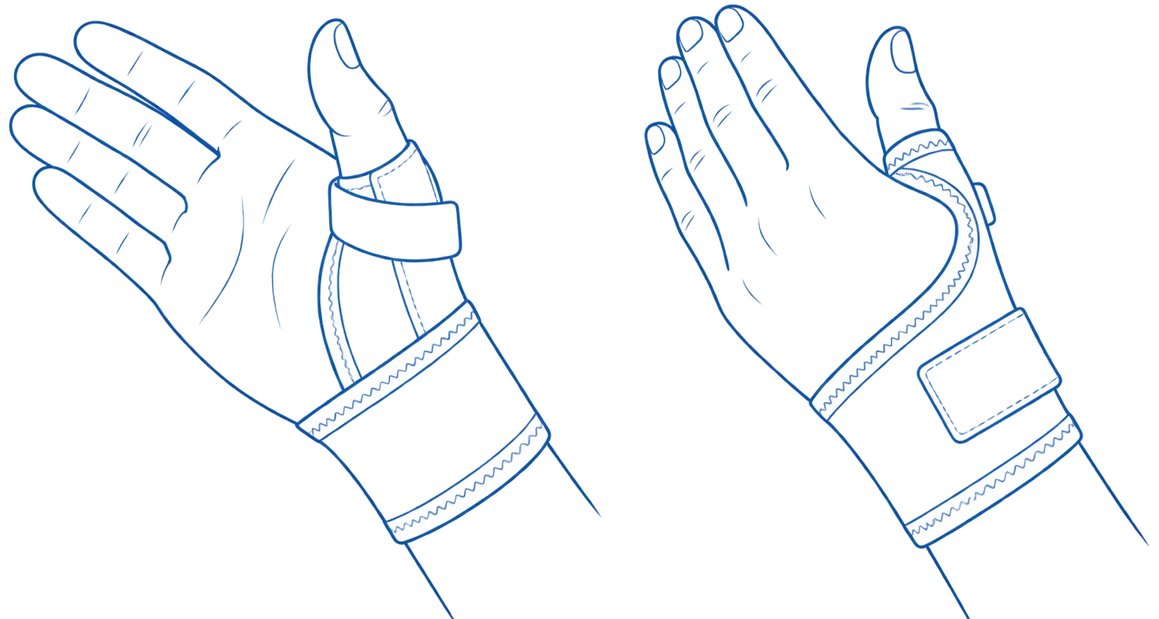
Remember: the metal support bar should lie at the outer edge of your thumb with the velcro fastening around your wrist. You may find it easier to keep the thumb velcro fastened when fitting and removing the splint.
Precautions
If you experience any swelling, severe pain, pressure, numbness, excessive stiffness, red areas or broken skin, stop wearing your splint and contact your healthcare professional.
Cleaning your splint
Your splint can be cleaned with soap and warm water or by machine on a delicate wash programme. Remove the metal support from its pocket before washing. Do not tumble dry or place on a radiator.
Remove the metal support from its pocket before washing. Do not tumble dry or place on a radiator.
We would ask that you self purchase replacement splints if required in the future.
Contacts
- ReACH Service Referrals, Forth Valley Royal Hospital on 01324 673733
- Physiotherapy Team, Stirling Health and Care Village on 01786 434061
When you call, please confirm you are a returning Rheumatology patient.