


A stroke is a sudden event that rarely gives you warning or time to prepare. You may experience emotional and physical symptoms, which can be difficult to adjust to. Family members can also have difficulty adjusting to these changes, especially when they are also carers.
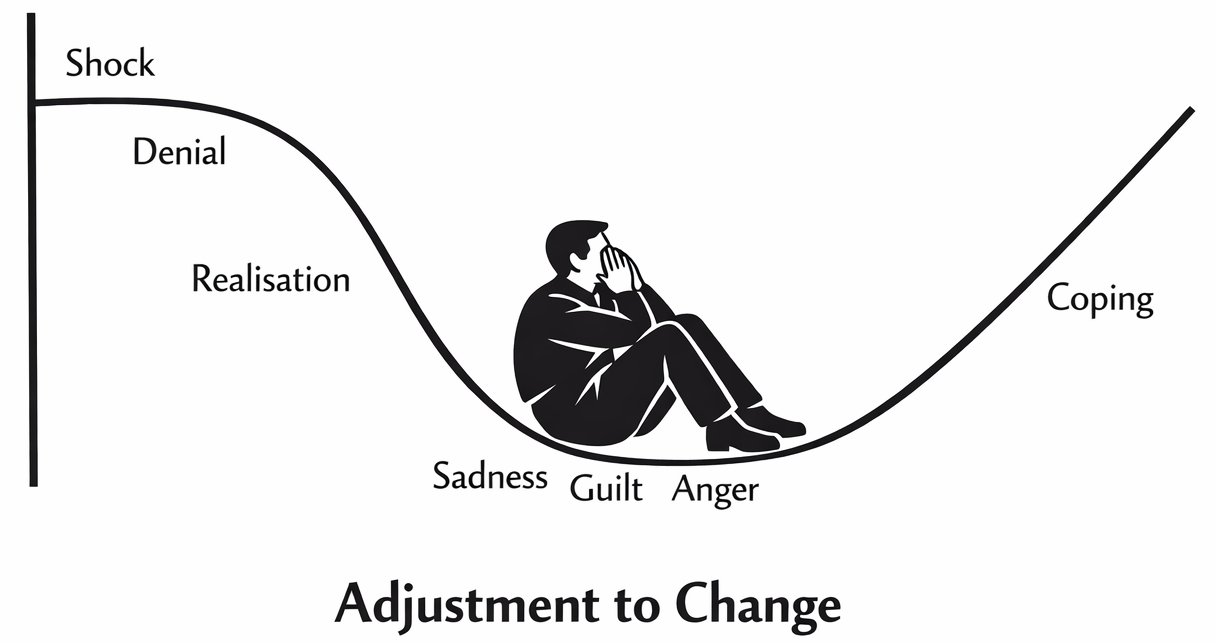
Adjustment to change
This diagram shows that intense emotions, like sadness or anger are normal and are a step in the process toward ‘coping’.
Many people compare this to the process they experience when they lose a loved one.
It is very common to feel more worried or anxious after a stroke. You may worry more about your health or about having another stroke, or about other aspects of your life e.g. finances or family. The anxiety can have powerful physiological effects on the body, e.g. fast breathing, trembling, palpitations or nausea. It can be tempting to avoid situations or tasks that make you anxious, but it is important to realise that, in the long-term, avoidance tends to increase the anxiety, making it harder to rebuild your life.
Feeling low in mood or depressed after a stroke is common. It can happen at any time, and last for a few weeks, months or longer. Low mood can often cause you to think about yourself or the world in a negative way e.g. experiencing thoughts such as “I am a burden”. If your mood is low, you may lack motivation and find it difficult to do things you enjoy or to spend time with other people. This can then stop you from doing things that might make you feel better, resulting in a vicious cycle.
Some people notice that their emotions feel much closer to the surface after a stroke. This could mean crying uncontrollably even if you don’t feel particularly sad, which can be confusing especially if this is out of character. This ‘post stroke emotionalism’ is thought to be caused by changes in the brain, making it more difficult to regulate your emotions.
Many people notice that they feel more angry or frustrated than before the stroke, or you may feel that you have a shorter fuse. Anger is a normal emotion when going through changes or when you feel you no longer have control over your life. Changes in your brain may also make it harder to manage your emotions, and difficulties with speech and communication can cause frustration, especially if you are prevented from expressing how you feel.
What might be helpful
- If your mind is racing with worries, it can be helpful to distract yourself by doing something else e.g. exercise, watching TV or chatting to someone.
- Sometimes writing down your worries can help you to gain some perspective. You can then identify any worries that you can do something about, and make a plan to tackle them.
- If there are some things you can’t change, try to ‘let the thought go’.
- Try to remember that your thoughts are not ‘the truth’, and that they will pass.
- Rather than thinking “I am a burden”, try saying to yourself “I notice I’m having the thought that I am a burden”. This simple change can help you to get some distance from your negative thoughts.
- Do your best to continue doing things that you value and enjoy – write them down, and try to plan at least one positive activity each day.
- Some people value keeping a note of positive things which have happened – try writing down three good things each day (no matter how small). You brain then starts to look for and notice these automatically.
- Controlling your breathing and heart rate can be helpful through breathing exercises.
- Speak to your family about the feelings. Work as a team to agree a plan of what they or you can do when these feelings arise, e.g. if you become tearful easily, you might want them to ignore it/ not draw attention to it.
- Accepting that things have changed does not mean giving up. It is about developing realistic goals for the future and reflecting on what is important to you.
- Try to focus on the gains you have made since the stroke, rather than comparing yourself to your ‘pre-stroke self’. Many people find it helpful to think of moving towards a ‘new normal’.
- When you are ready, it can sometimes be helpful to join a stroke group. You might find this hard, but it can be helpful to learn from, and share with, others.
When to seek additional support
All of the above emotions are part of the normal post-stroke adjustment process, which can often take up to two years.
However, some people can benefit from additional support with their emotions following stroke. If you notice any of the following, you should seek further help from a mental health professional. This can usually be done via your GP.
Your rehabilitation team or stroke nurse can also help if they are still involved.
- Persistent low mood, which doesn’t lift with distraction
- Persistent anxiety or panic which significantly restricts your normal activity
- Low mood or anxiety that prevents you from engaging with ongoing rehabilitation
- Persistent flashbacks or nightmares associated with your stroke experience
- Persistent suicidal ideation
- Making plans to harm yourself or others
Useful Numbers
Chest, Heart and Stroke Scotland: 0808 801 0899
Stroke Association: 0303 3033 100
If you just want to talk to someone, these free confidential helplines are available: Samaritans – 116 123 (24hours)
Breathing Space 0800 838587
Silverline 0800 470 80 90 (for anyone over 55)
If you require urgent support, call NHS 24 on 111