


A cube pessary is a small, soft device used to support the pelvic organs and relieve symptoms of prolapse. This page explains how to use, care for, and manage your cube pessary safely at home, including step-by-step instructions for insertion and removal, advice on long-term use, and guidance on when to seek help.
Daily Care
- Remove and clean your cube pessary every day.
- Before inserting:
- Wash the pessary with mild soap and rinse thoroughly with water.
- Empty your bladder.
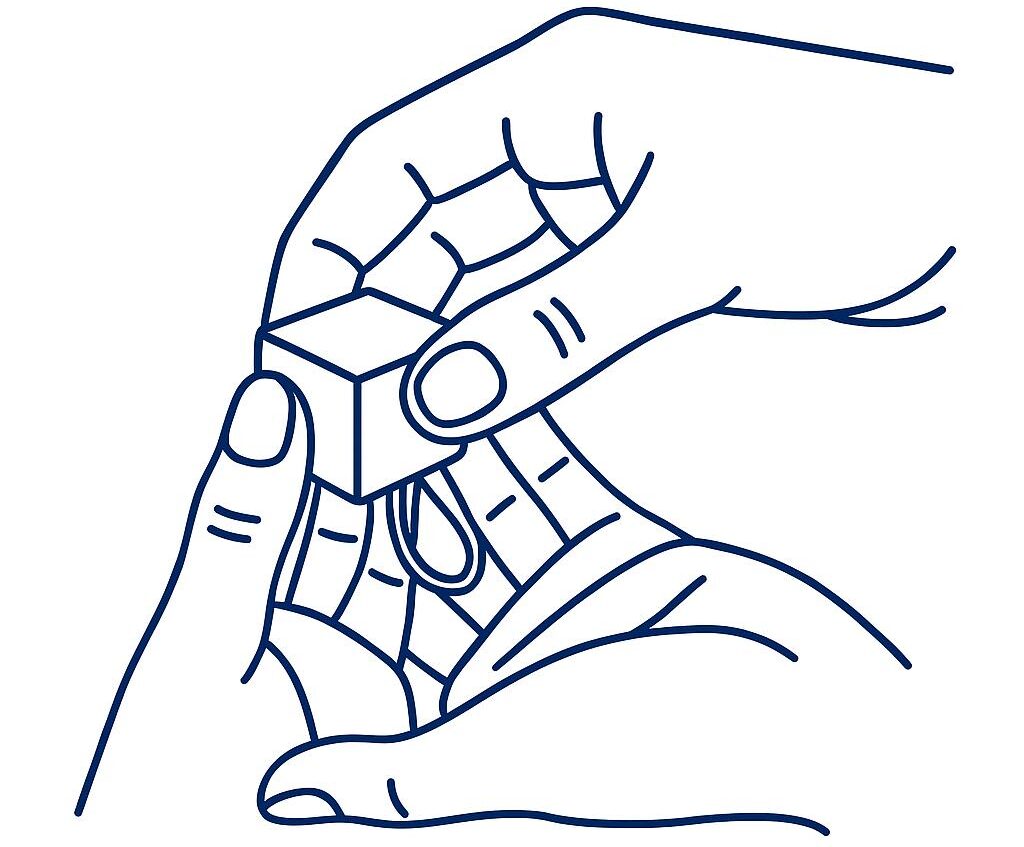
Figure 1: Compressing the pessary
How to Insert the Pessary
- Compress the pessary between your thumb and forefingers (see Figure 1).
- Lubricate the leading edge with either Estriol cream or lubricating jelly.
- Spread the labia (the lips of the vagina) with your non-dominant hand.
- Insert the pessary into the vagina as far as you can, with the loop or string pointing downwards.
- The white cube pessary has a loop, which should be inside the vagina.
- If your pessary is pink with a string, the string will sit outside the vagina.
- The pessary will position itself once inserted. You should not feel it when it’s in place.
How to Remove the Pessary
- Wash your hands.
- Slide your fingertips into the vagina to locate the string or loop and find the space between the pessary and the vaginal wall.
- Pinch the pessary (as you did to insert it) to break the suction.
- Gently pull it down towards the opening of the vagina.
- Once the suction is broken, keep the pessary pinched while removing it.
- Clean the pessary and leave it out overnight.
Follow-Up and When to Seek Help
- Sometimes, the size or shape of your pessary may need to be changed after fitting.
- If you have difficulty passing urine or experience severe discomfort, telephone Ward 6 on 01324 566390 for an emergency appointment.
- If you notice any vaginal bleeding or offensive discharge, contact your GP.
Long-Term Use
- The cube pessary is designed for safe, repetitive long-term use and should last up to 5 years.
- Contact the Gynaecology Outpatient Clinic for a replacement if you notice signs of wear.
- If you develop problems such as vaginal bleeding or offensive discharge, stop using the pessary and contact your GP or the Urogynaecology Department on 01324 567145.