


Attending the Oncology Unit
Staff in the Oncology Unit aim to make your time in the Unit as comfortable as possible.
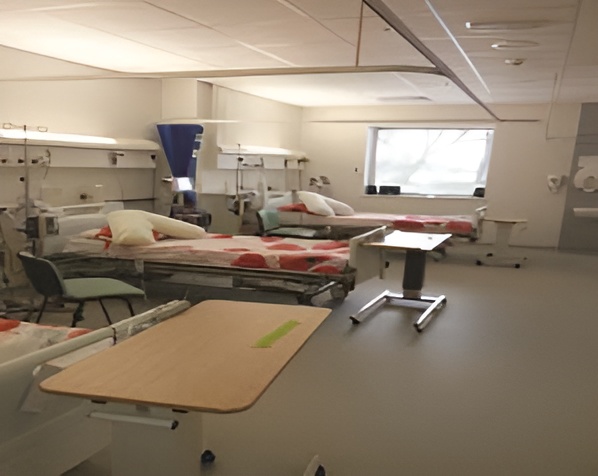
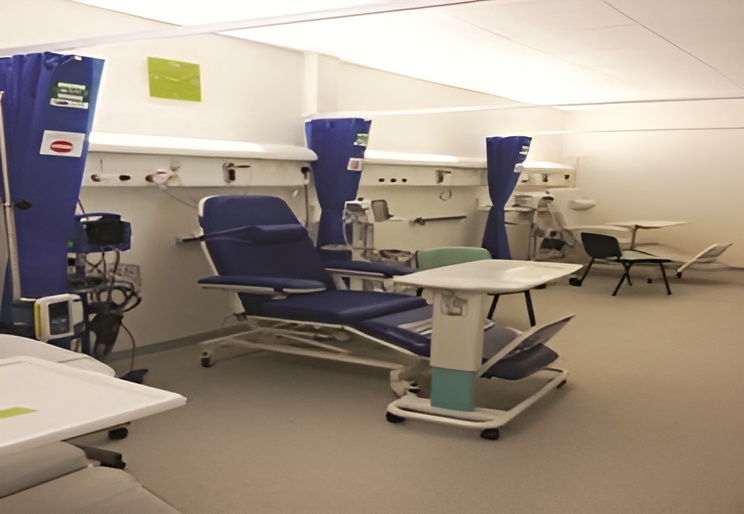
There are 8 treatment chairs and 6 beds within the treatment area and these are well spaced out for privacy and infection control purposes.
You will be offered hot drinks and a lunch if you are attending over lunch time.
The Oncology Unit in Forth Valley Royal Hospital is open Monday to Friday 09.00 – 17.00.
Your appointment/consultation with oncology health care professionals will take place by telephone, video call or face to face and this will be stated clearly on your appointment letter or by oncology staff.
Staff will look at blood results and discuss any side effects you may have had; how to manage and alleviate these and, if appropriate, prescribe your Systematic Anti-Cancer Treatment (SACT). At the end of this appointment/consultation you will be given a day and time to attend the Oncology Unit for your treatment.
Before each appointment/consultation please arrange to have your pre-chemotherapy bloods checked the day or two (no earlier) before. These can be checked at your local health centre or a phlebotomy hub (if you have one nearby). Sometimes staff need to re-check your bloods on the day (usually if the neutrophil count has not recovered quite enough for us to safely deliver your SACT). This will be discussed with you and staff will try and facilitate a repeat blood check on the day of appointment/consultation so that it does not delay your planned treatment.
Most patients are asked to attend for treatment in the day or two following their appointment/consultation. There are some treatments that are more suitable to be administered on the same day as your appointment/consultation. The process to prescribe, safely check and prepare your chemotherapy can take a couple of hours.
Staff will take your appointment/consultation time into consideration, to ensure your wait in the Oncology Unit or treatment area is kept to a minimum. If you have a face to face appointment and treatment on the same day, it can take up to two hours between your initial consultation and treatment following your arrival on the ward.
If you are uncomfortable at any time during your visit or feel that your wait is longer than you expected please speak to a member of staff.
How SACT is given
There are many different groups of anti-cancer drugs which can be used to treat cancer. Information about the possible side effects of your SACT will be discussed with a chemotherapy nurse at your
pre-assessment appointment and you will be provided with written information about your drug regime.
The most common ways SACT is given are:
Drugs given into a vein go directly into the blood stream where it reaches all parts of the body. The most common way intravenous SACT is given is through a cannula, a short thin tube inserted into a vein in the back of your hand or forearm. This may be a bit uncomfortable or painful initially, but this should wear off quite quickly. The cannula will be removed after each treatment before you go home.
If you notice any pain, swelling or discolouration around the cannula you must make a healthcare professional aware immediately.
If the drug leaks into the area around the vein while being given, this is called an extravasation. Some drugs can damage the tissues around the cannula if the cannula becomes dislodged and is no longer positioned in the vein correctly.
Your healthcare professional will take care to prevent extravasation occurring when giving you your treatment, sometimes it will take more than one attempt to place a cannula and if your healthcare professional is concerned about the cannula, they will start again in another area.
To help staff reduce any issues, please keep anything you may need during your treatment e.g. a book, drink or tissues, near your free hand before your treatment starts and wear sleeves that you can roll up easily to keep the skin around the cannula visible.
Your venous access will be discussed at your pre-assessment appointment, and if your venous access is poor and there is a risk of extravasation, a nurse will discuss insertion of a Central Venous Catheter (CVC). This is usually a PICC line or Hickman line. These lines are inserted and remain in place for the duration of your treatment. If this is required a healthcare professional will discuss this with you and provide written information.
SACT tablets are as strong and effective as those given intravenously. Once taken by mouth they are absorbed into the blood stream and carried around your body, just like intravenous treatment. The drugs you are given to take home make up a complete course of treatment. Your healthcare professional will give full instructions about when to take your tablets.
Always read the labels and follow instructions carefully.
All tablets should be stored safely and out of reach of children. Other people at home should not handle the drugs with their bare hands to avoid absorption through the skin. If you require help to take your tablets, a healthcare professional can supply gloves for your carer to wear. Never crush tablets or open capsules. If you have difficulty swallowing the tablets please let your GP or a member of the oncology team know.
Bring any unused tablets back to the hospital for safe disposal.
Common side effects of SACT
Different drugs cause different side effects. Everyone is individual and will react to SACT drugs differently. Some people have very few side effects while others may have more. You will be carefully assessed before each cycle of treatment.
- Fatigue – This is the most common side effect of SACT. Try to get your recommended 8 hours sleep at night and have a short nap in the afternoon, if required. Light exercise is recommended. Please speak to a healthcare professional for advice or visit the Macmillan website for further information www.macmillan.org.uk
- Nausea and vomiting – You will be given anti-sickness drugs prior to your treatment and to take home.
- Hair loss – This can happen 14-21 days after SACT however not all anti-cancer treatments cause hair loss. A healthcare professional can arrange a wig for you and scalp cooling facilities are also available within the Oncology Unit which can help reduce or prevent hair loss from chemotherapy.
- Dry mouth/mouth ulcers – You will be advised to keep your mouth clean and moist throughout your treatment to prevent mouth ulcers.
Low blood counts and increased risk from infections. You will be asked to have your blood checked the day before each clinic appointment to check your blood levels.
SACT can make it difficult for you to fight infections by lowering your white blood cells. Due to this, what seems like a minor illness can develop quickly into a life threatening illness. If you feel cold, shivery or unwell you must check your temperature (this may be the first indication of an infection). If your temperature is 37.5 degrees and above you must contact the Cancer Treatment Helpline on 0800 917 7711.
Contraception during SACT
All patients, regardless of age should use a barrier method of contraception during SACT treatment (for the total time). Drugs are excreted in bodily fluids and it is important to protect your partner from accidental exposure to these drugs. Temporary or permanent infertility may occur as a result of SACT. Infertility could happen at any time during your treatment, however you may also remain fertile, and it is important to avoid pregnancy due to the risk of potentially damaging effects on the embryo (e.g. birth defects).
Methods of contraception that are suitable for use throughout and on completion of your treatment should be discussed with a healthcare professional and further information can also be found on the Macmillan Cancer Support website www.macmillan.org.uk
If you are concerned about fertility, it is important you discuss your options with a healthcare professional before treatment starts. The options available will depend on your age, what type of cancer you have and how soon your treatment needs to start. A healthcare professional can also refer you to a fertility specialist to discuss your options further.
How to safely dispose of bodily waste
Whilst you are receiving SACT; your urine, bowel movements and other bodily fluids may contain traces of harmful drugs. This is not harmful to you, but may be harmful to anyone else coming into contact with them. To avoid these risks, there are a few simple things that you and family members can do to avoid accidental exposure.
- Sit down whilst passing urine.
- Wipe around the toilet seat.
- Flush the toilet twice – with the lid down.
- Wash your hands thoroughly with soap and hot water after each visit to the toilet.
- Make sure that the person who is cleaning the toilet at home wears good quality rubber gloves to reduce the risk of contamination.
- Always wear gloves to handle any bed linen, towels or clothes soiled with urine, stool or vomit. Wash them separately – using the hottest setting, then run the machine again empty through its cycle.
If you have a stoma bag:
- Always wear gloves.
- Place the stoma bag and any wipes used into a disposable bag and tie securely. Place the bag in a second plastic disposable bag and dispose of with household waste.
- Wash hands thoroughly.
If you have a catheter bag
- Always wear gloves.
- Empty catheter bag into toilet and flush the toilet twice. If splashes occur, wash with hot soapy water.
- To dispose of catheter bag place in a plastic disposable bag, tie the bag securely and place into another plastic disposable bag and tie securely. Dispose of this with household waste.
- Wash hands thoroughly
Frequently asked questions
Some people do work throughout their treatment; however this depends on your occupation, disease and the treatment you are receiving. You should discuss this with a member of staff. You will need time off for your appointments and if you feel unwell you may need time off work at short notice, this should be discussed with your employer to decide what will work best for you.
You may be eligible for financial support. Please speak to a member of staff if you have any concerns. Macmillan Money Matters may be able to offer financial assistance.
Staff advise against travelling abroad during your SACT due to the risk of becoming unwell. It is advised to wait a month after completion of your treatment before travelling abroad. Everyone’s circumstances are different so please speak to a member of staff for advice. You will also need to make sure you have travel insurance before going abroad. Macmillan Cancer Support and Maggie’s Centres can provide up-to-date travel insurance information and advice.
Some SACT can make your skin more sensitive to the effects of the sun. It is therefore important to protect your skin by using a high SPF (factor 30-50) sunscreen which protects you from both UVA and UVB rays. Apply 30 minutes before you go outside and don’t forget to cover your ears, neck and feet. Wear a hat. No sun screen can protect you completely so try to stay in the shade and cover up as much as you can.
Smoking can increase the chances of infection while on SACT, as well as increasing the risk of developing a second cancer. Some drugs can affect your heart and continuing to smoke puts you at risk of further complications such as stroke, clots or heart attack.
If you want to stop smoking please inform a member of staff, who will be able to refer you to the smoking cessation team for further support and advice.
You can continue to drink alcohol in moderation, however it is recommended to avoid for the first 48 hours after treatment, as both drugs and alcohol are broken down by your liver and this means your liver has to work much harder.
Very little is known about the interactions of vitamins and cancer treatments. If you eat a healthy balanced diet this will provide you with all the vitamins you need, therefore supplements are not required. If you are taking supplements please inform the oncology pharmacist.
Most claims about herbal remedies are based on anecdotal experience rather than clinical trials. Many supplements are produced with minimal control measures with little evidence to support control or cure of cancer. Some herbal remedies will interact with SACT drugs by decreasing their effectiveness or increasing the risk of side effects.
We do not recommend that you take any herbal, Chinese or supplementary medicines while you are receiving SACT.
Please speak to a member of staff if you have any questions or concerns.
Your response to treatment will be monitored by staff at regular intervals through blood tests, scans or x-rays. If your treatment is being given post surgery to reduce the risk of the cancer returning (adjuvant treatment), there may be no way of telling if the chemotherapy has worked as there is nothing to scan.
You may have regular check-up appointments with your consultant or clinical nurse specialist and possible blood tests, scans or x-rays. If you notice any new signs or symptoms between appointments please contact your clinical nurse specialist. You may also be referred back to a surgeon or your GP Practice
The oncology nurse team strive to administer your treatment safely and professionally in a comfortable environment and make every effort to support you throughout your anti-cancer treatment. If you have any concerns, questions or feel anxious at any time please inform a member of the team who will be happy to help.
Contact Details
- Oncology Reception (for advice about appointments) – 01324 566300
- Treatment Area (for advice about treatment and side effects) – 01324 566320
- Maggie’s Centre Forth Valley – 01324 868069
- Macmillan Cancer Support (www.macmillan.org.uk) – 0808 808 0000
- Cancer Treatment Helpline – 0800 917 7711