


Nail problems can affect the appearance, comfort and health of your feet. This page explains common nail conditions, including thickened nails, fungal nail infections, curved toenails and ingrown toenails.
You’ll find self-care advice, prevention tips and information on when to seek further help.
In this section:
Thick Toenails Fungal Toenails Involuted (Curved) Toenails Ingrown Toenails
Thick toenails
Thick nails, also known as onychauxis, is a nail disorder that could cause fingernails or toenails to grow abnormally thick.Over time, the nails may become curled and turn white or a yellow colour.
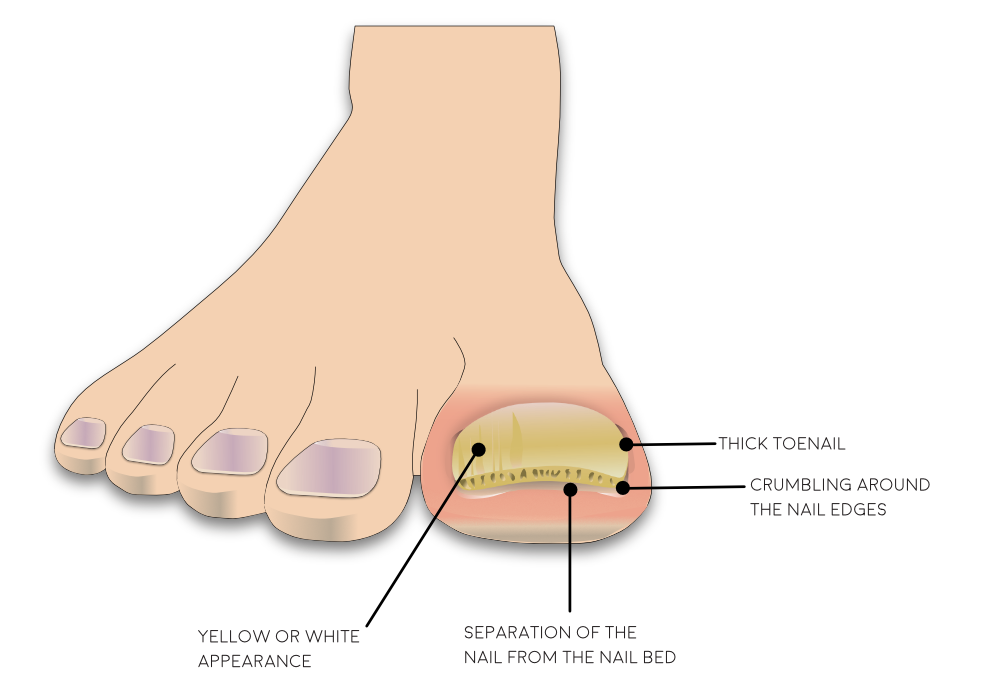
Symptoms may become more severe if left untreated. The nails may begin to curl and become too thick that it can be difficult to self-care.
What causes thick toenails
The most common causes include:
- Fungal Infection
- Ill-fitting footwear
- Trauma
- Hereditary
- Health condition that effect the skin or nails e.g. Psoriasis
- Reduced circulation
- Diabetes
Thickened nails are not contagious and can’t be spread from person to person directly.
Looking after thickened nails (self-care)
- Treat underlying health conditions
Attend your GP if you think you may have a fungal infection or an underlying health condition that may be causing your thickened nails - Cut and file nails regularly
Regular cutting and filing of the nails will reduce the thickness and improve the appearance and any discomfort caused by the nail - Wear well-fitting shoes
Tight/narrow shoes can cause thick nails and can make symptoms worse- especially pain. - Move more
A boost in your circulation to your lower extremities (legs and feet) will increase the blood supply, oxygen and other nutrients may improve the unusual nail growth issue.
When should you seek advice for thick toenails?
If you cannot self-care or have a family member help, you may need to contact the podiatry service.
If you have regularly been self-managing your thickened nail and still have unmanageable pain or discomfort, you may choose to have nail surgery and have the nail permanently removed
Fungal toenails
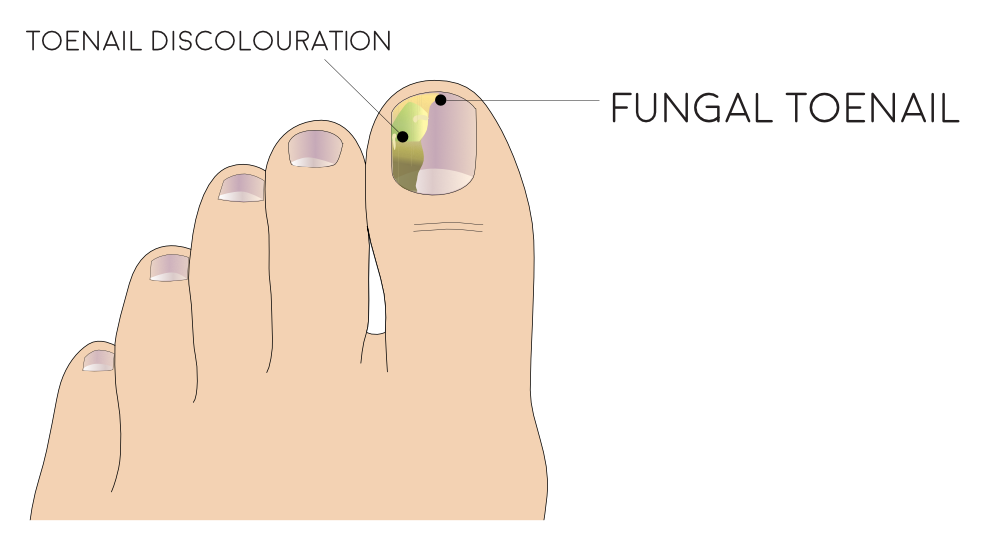
A fungal nail infection (Onychomycosis) can affect any part of the nail. If left untreated and the infection worsens, the nail may become discoloured, change shape and the surrounding skin may thicken.
Signs and symptoms
The nail may change in colour and shape. This can affect a single nail or several nails at one time. The first and fifth toenails are most commonly involved.
Different presentations include:
- Small flakey white patches and pits on the top of the nail plate.
- White or yellow streaks along one side of the nail.
- Debris may build up under the nail.
- The nail is discoloured and thickened
Looking after fungal nails (self-care)
- Anti-fungal nail paints/Lacquer
You can purchase anti-fungal nail lacquers in your local pharmacy, health shops and supermarkets. File your nails weekly and apply a new coating of the lacquer as described on its packaging for up to 1 year. - Anti-fungal creams
You can purchase anti-fungal creams in your local pharmacy, health shops and supermarkets. Apply this to the infected nails and surrounding skin once a day. This can take up to 12 months to cure infection. - Oral tablet
If you are unsuccessful with the anti-fungal nail lacquer/ creams you may need to contact your GP for an oral anti-fungal treatment. You will be required to have a blood test prior to treatment to check your liver function and then take this medication .
Do you always need treatment?
Treatment is not always necessary if the nail is not painful or causing problems.
However:
- Fungal nail infections do not usually clear on their own
- They may spread or worsen over time
Good nail care can help keep nails comfortable and prevent complications.
Looking after your nails (self-care)
- Trim nails regularly, cutting straight across
- File down thickened areas
- Avoid cutting into the corners of the nail
- Keep feet clean and dry
Routine podiatry is not usually required for fungal nail infections.
Treatment options
Medicated nail lacquers, may be suitable for mild or early infections.
- Usually applied once or twice weekly
- Require regular use for several months
- May not change nail thickness or shape
- Always check with pharmacist to check if this is suitable for you to use.
Tablets may be prescribed if the infection is more severe:
- A nail sample is usually tested first to confirm fungal infection
- Treatment typically lasts 3–12 months
- Blood tests may be needed before and during treatment
- Not suitable for everyone
Important to know about treatment
- Improvement takes time, often up to 12–18 months
- Healthy nail should begin to grow from the base
- The damaged nail will gradually grow out
- The nail may not return completely to normal
Other treatment options
This may be considered if the nail is very painful or severely affected, usually after other treatments have not worked. If you wish to explore whether this is appropriate, please contact the podiatry service for advice.
- May be considered if the nail is very painful or severely affected
- Usually, a last option if other treatments have not worked
- The nail may regrow, sometimes still affected
This may be an option for stubborn fungal nail infection and is usually accessed privately. NHS Forth Valley Podiatry Services do not provide this treatment.
How to reduce your risk
Do:
- Keep feet clean and dry
- Change socks daily
- Wear well-fitting shoes made from breathable materials
- Replace old footwear if needed
- Treat athlete’s foot promptly
- Maintain regular nail care
Avoid:
- Walking barefoot in communal areas
- Sharing towels, socks or nail care equipment
- Wearing tight or non-breathable footwear for long periods
- Nail injury or trauma where possible
When should you seek advice for fungal nail?
Seek advice from your GP or pharmacist if the skin around the nail becomes red, swollen, itchy, flaky or infected. Contact the podiatry service if you wish to discuss whether nail surgery may be appropriate.
Involuted (curved) toenails
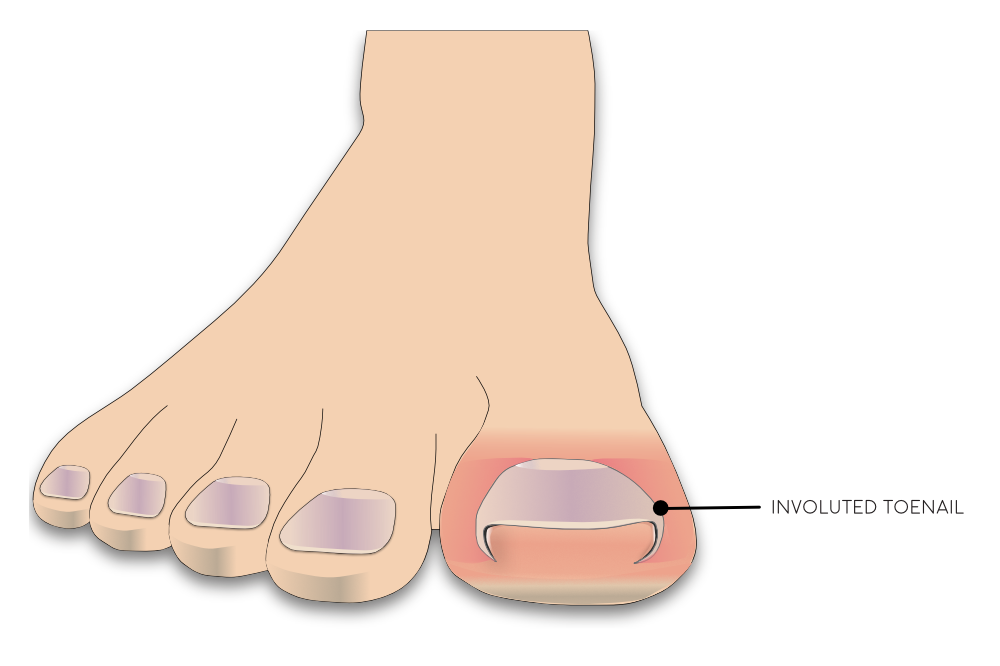
A nail that grows in curved or curly at the sides is called an involuted nail. This can be painful as the nail can dig into the skin and may lead to an ingrown toenail.
What causes an involuted toenail
- A major trauma
- Repeated pressure from shoes on long nails.
- Genetics
- Psoriasis, eczema and a number of other systematic diseases can affect the toenails.
How can I prevent an involuted toenail?
- Correctly trimming your nails. Cut them straight across and do not round the corners of the nail.
- Wear good fitting shoes with plenty of room at the toes.
- Try to avoid shoes with a small/shallow toe box such as pointed shoes.
Looking after your nails (self-care)
- Correctly trimming your nails. Cut them straight across and do not round the corners of the nail.
- Wear good fitting shoes with plenty of room at the toes.
- Try to avoid shoes with a small/shallow toe box such as pointed shoes.
When should you seek advice for curved nails?
If you cannot self-care or have a family member help, you may need to seek private podiatry care.
If self-care has not improved your symptoms and you are still having pain or infection suspected you may need to have the nail permanently removed under local anaesthetic by your podiatrist. Contact the podiatry service if you wish to discuss whether nail surgery may be appropriate.
Ingrown Toenails
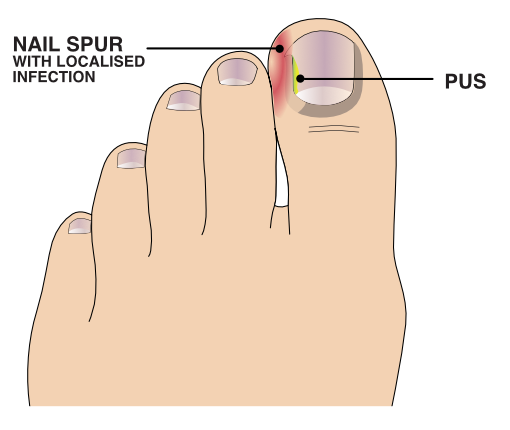
An ingrown toenail, also known as onychocryptosis, is where a piece of nail cuts into the flesh of the toe. It can be extremely painful, red and swollen and in some cases it can cause pus and bleeding.
What causes an ingrown toenail?
- Cutting nails too short.
- Cutting the corners of the nail where it meets the skin.
- Picking toenails.
- Tight or ill-fitting shoes or hosiery.
- Excessive moisture.
- Damage/trauma to the nail or toe.
- Fungal infection.
- Naturally curved nails.
How to reduce your risk
Do:
- Use the right equipment (eg. Nail nippers) and technique when cutting your nails.
- Wear cotton socks as these are breathable.
- Change socks regularly throughout the day to prevent increased moisture.
- Ensure footwear and hosiery fit appropriately.
Don’t:
- Cut your nails to short. Ensure the nail is not lower than the edge of the skin.
- Pick your toenails.
- Wear tight fitting shoes or shoes that are very narrow at the toes.
Looking after your nails (self-care)
If left untreated, an ingrown toenail can become infected.
So it’s important that you:
- Keep your feet clean by washing them regularly with soap and water or salt water footbaths.
- Change your socks daily.
- Cut your toenails straight across, DO NOT cut down the side of your nail as this can worsen the condition.
- If you have picked your nail or cut it too short, allow it to grow out.
- Gently push the skin away from the nail using a cotton bud – you can try this after using a small amount of olive oil to soften the skin.
- Wear comfortable shoes that fit properly.
When should you seek advice for ingrown nails?
You will be seen by NHS Podiatry if you:
- Have an infection or your GP has prescribed antibiotics for an infection
- Have any underlying medical conditions (eg. Diabetes or taking immunosuppressant medication)
- Have tried to self-treat and had no improvement.
- Have seeked professional help and still had no improvement.
If this is your first episode of an ingrown toenail, the podiatrist may be able to resolve it by removing the spike. Nail surgery may be recommended if your toenail doesn’t improve. Depending on the severity of your symptoms, this may involve permanently removing part or all of your toenail.