

NHS Forth Valley Contributes to Landmark OPTIMA Breast Cancer Study
NHS Forth Valley has played a significant role in a major international study that could transform the treatment of breast cancer and reduce the need for chemotherapy for thousands of patients.
The OPTIMA study, funded by the National Institute for Health Research (NIHR) and led by University College London (UCL), set out to improve decision-making around chemotherapy for patients with hormone-sensitive early breast cancer. Traditionally, many patients undergo surgery followed by chemotherapy and hormone therapy. However, OPTIMA explored whether all patients benefit from chemotherapy, or if treatment could be more tailored based on individual risk.
Forth Valley Royal Hospital opened the study locally in 2013, with an initial recruitment target of 15 patients. Thanks to strong engagement from clinical and research teams, a total of 62 patients were recruited – more than four times the original target. Participants from NHS Forth Valley will continue to be followed up for up to 10 years after their surgery.
Across the UK, 4,821 patients took part in the study at more than 100 hospitals, making OPTIMA one of the largest trials of its kind.
Recent findings from the study suggest that many patients with breast cancer could safely avoid chemotherapy. A key development from the trial is the use of a DNA-based test known as the Prosigna test. This test helps identify which patients are likely to benefit from chemotherapy and which can be treated effectively with hormone therapy alone.
The results indicate that around two-thirds of patients in the study did not require chemotherapy, raising the potential for a significant shift in clinical practice. Avoiding chemotherapy can reduce the risk of side effects for patients, as well as easing the demand on NHS resources.
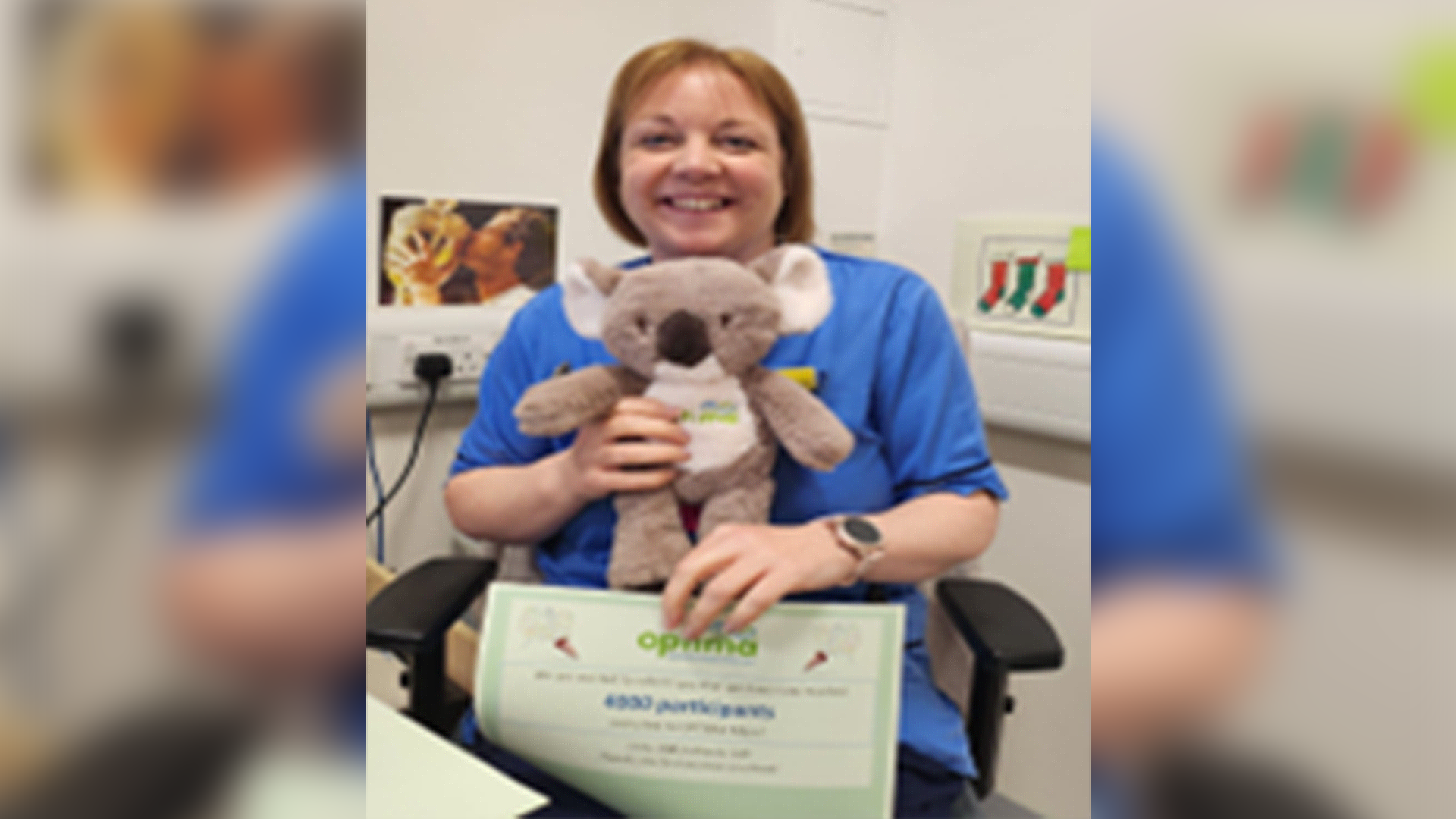
NHS Forth Valley’s Research & Development team played an important role in delivering the study locally and supporting participants throughout their involvement.
Key staff included:
- Dr Judy Fraser, Principal Investigator
- Research Nurses Karen Petrie, Anna Hamilton and Laura McGenily
- Breast Cancer Nursing Teams and the wider Research Team
The team worked closely with patients to ensure they were fully informed about the study and supported throughout their treatment and follow-up.
One local participant, who joined the trial following their diagnosis, shared their experience:
“Following my breast cancer diagnosis, initial treatment discussed included surgery, chemotherapy and radiotherapy. Having witnessed a close relative being very unwell following chemotherapy, I was very apprehensive about the prospect.
“The OPTIMA trial was discussed and, after receiving verbal and written information, I agreed to participate. I was subsequently informed that chemotherapy was not required. I felt very relieved.
“I was delighted to see the recent results of the study and feel very grateful to have taken part in research that could improve treatment for future patients. I would like to thank all involved, especially the Breast Care Service and Oncology Research Nurses at Forth Valley Royal Hospital.”
The success of the OPTIMA study represents a significant step forward in personalised cancer care. If adopted more widely, the use of genomic testing such as Prosigna could help ensure patients receive the most appropriate treatment for their individual condition.
For NHS Forth Valley, contributing to research of this scale highlights the vital role local teams play in advancing patient care and supporting innovation within the NHS.
For more information about the study, visit Optima Breast Study.