



Meet our mascot, bumble bee!
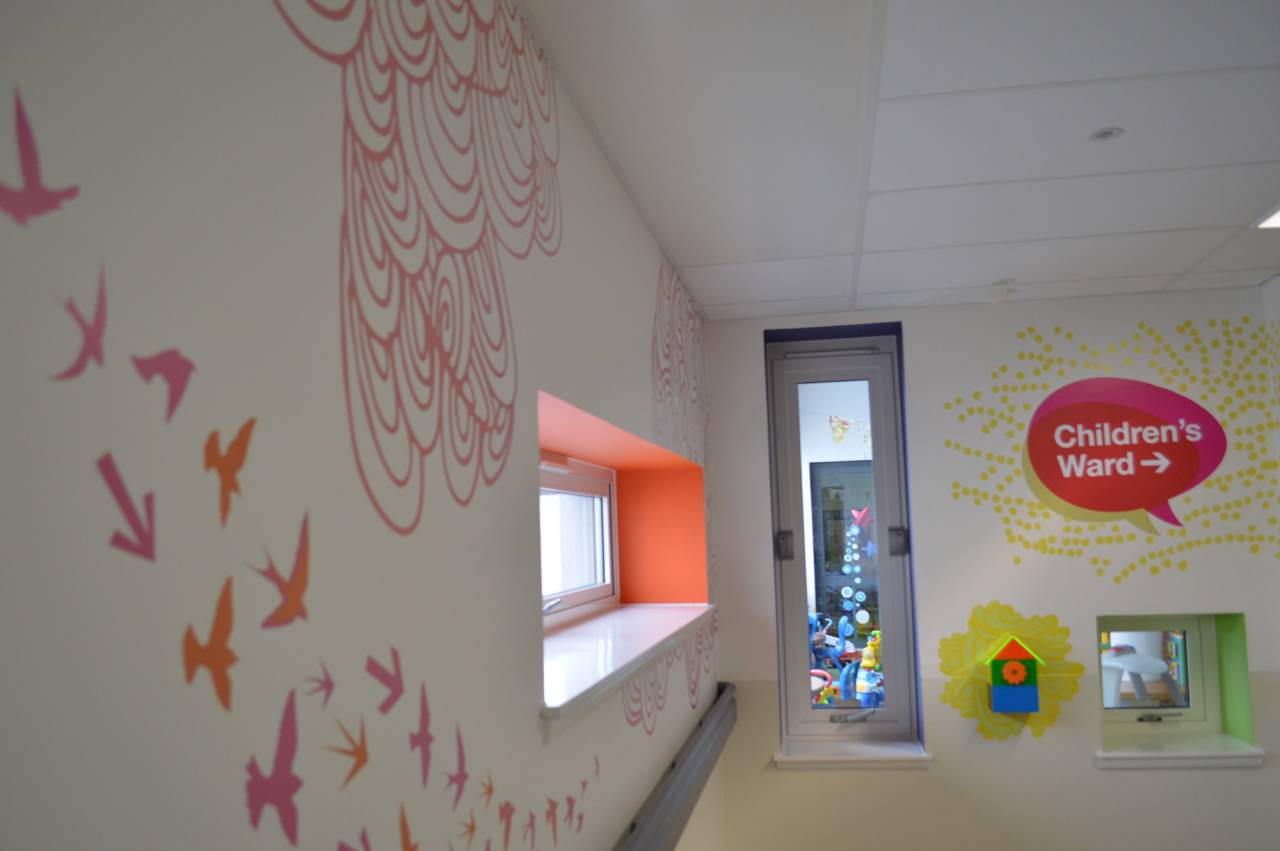
Welcome to the Children’s Ward and Children’s Assessment Area at Forth Valley Royal Hospital. On this page you will find most of the information you need to make the stay for you and your child as comfortable and as friendly as possible.
Facilities for patients include:
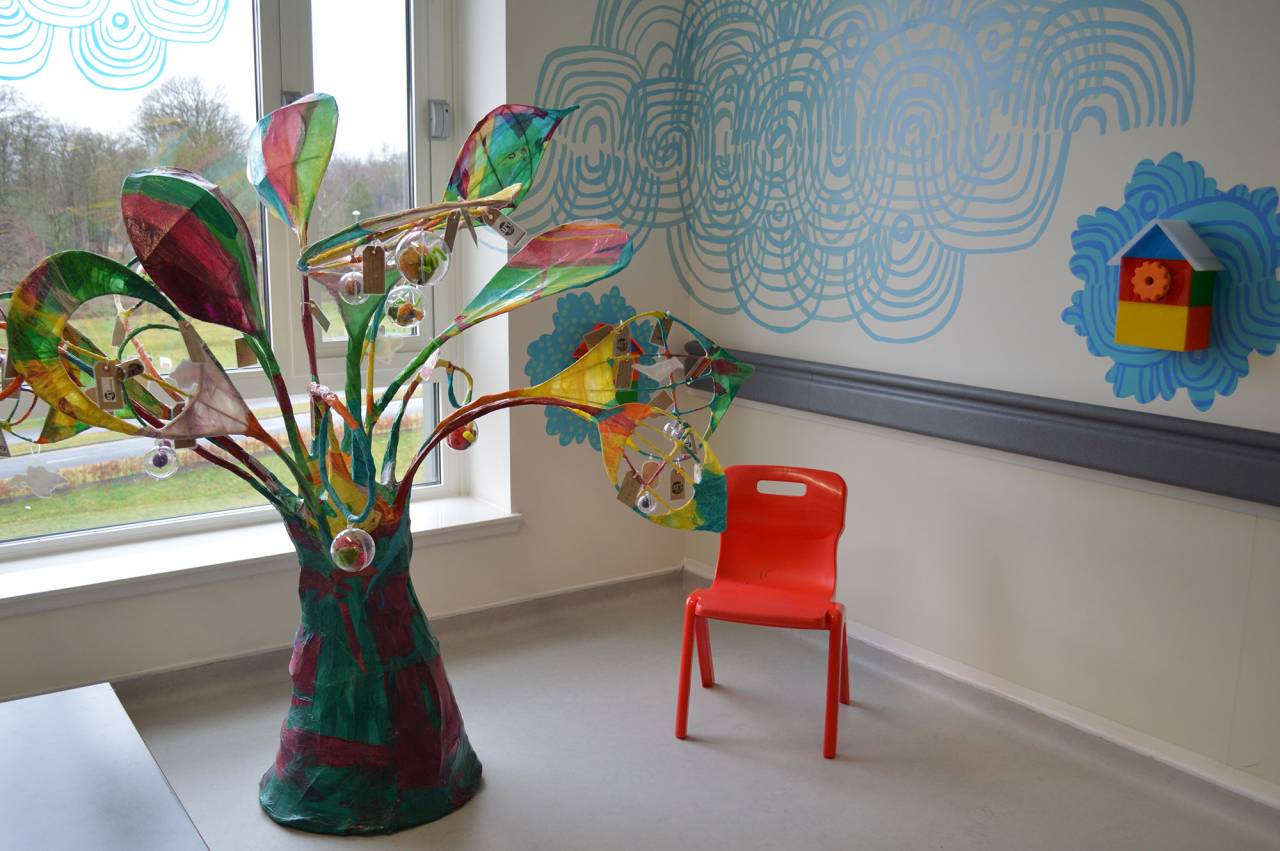
- A waiting area with books and toys
- 25 beds in four-bedded bays or single rooms
- All beds have individual TVs
- A playroom with a large selection of toys, books games and videos. This closes for a short time after lunch and after 7.00pm in the evening to allow children to rest
- An outdoor secure play area with direct access from the Ward
Visiting children may also use play areas but must be supervised by an adult as the hospital cannot accept responsibility for visiting children.
How to find us
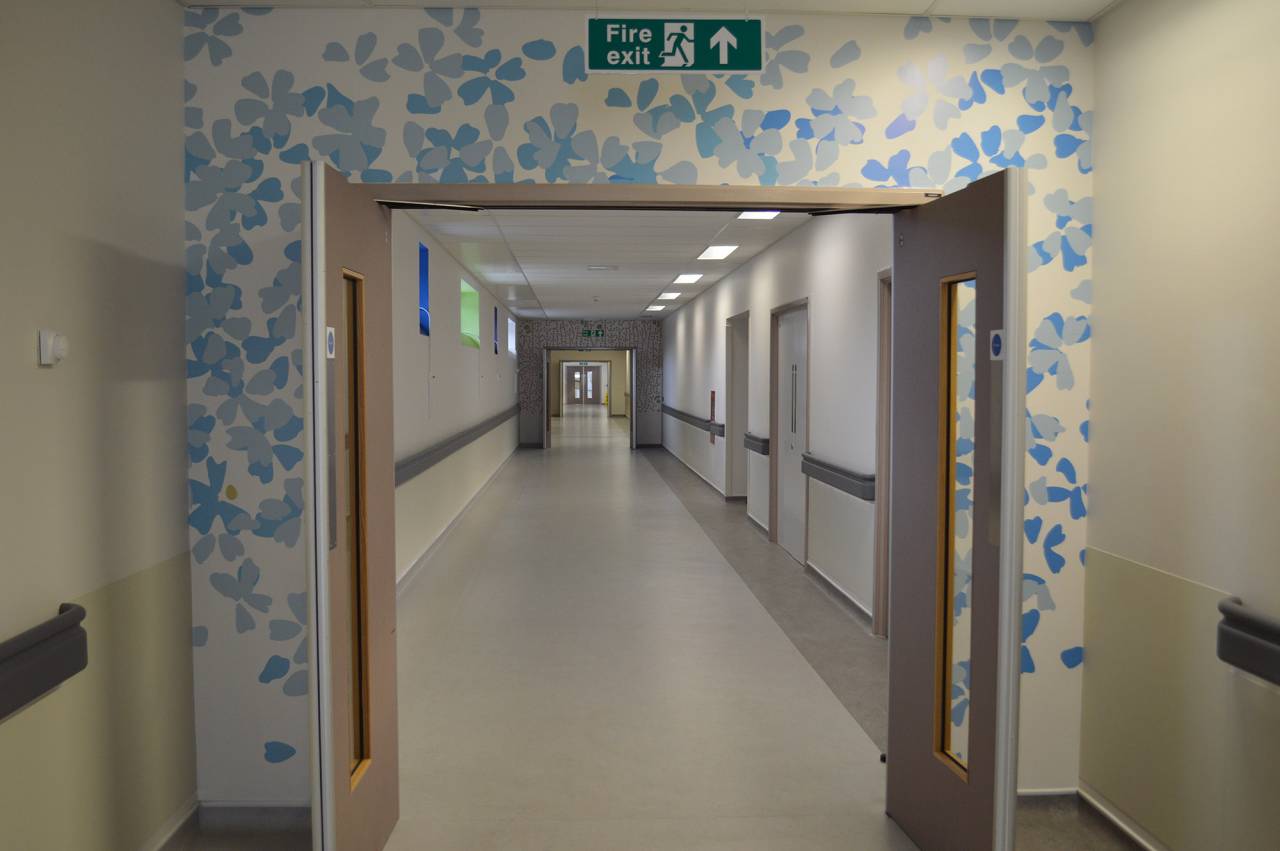
We are on the second floor of the Women and Children’s Unit which is situated to the left of the main Forth Valley Royal Hospital building. We have our own separate entrance which is locked overnight. If you arrive in the evening there is a night entrance door to the right. A buzzer operated door entry system will connect you directly to the Ward where staff can automatically unlock the door.
Restrictions
Some items you may wish to bring with you are restricted for the safety of patients and visitors.
To help keep our hospitals safe, we ask visitors not to bring latex balloons into any hospital buildings, wards, outpatient departments or public areas (including atriums).
Some people have a latex allergy, and exposure can cause symptoms within minutes. In rare cases, it can lead to a life-threatening reaction (anaphylaxis).
Why latex balloons are a problem in hospitals
Latex balloons can release tiny particles into the air and onto surfaces. In busy hospital environments, this increases the chance of accidental exposure for anyone who is sensitised to latex.
What you can bring instead
We know gifts are often brought to cheer someone up. Choosing latex-free options helps protect people with allergies.
- Foil / metallic balloons labelled non-latex
- Cards
- Books, puzzles or colouring items
- Small comfort items (please check with the ward if you’re unsure)
Recognising an allergic reaction
Symptoms can include:
- Itchy rash or hives
- Swelling of the face, lips or eyes
- Itching or tingling in the mouth
- Throat tightness, hoarse voice, trouble swallowing
- Wheezing, coughing or breathing difficulty
- Dizziness, feeling faint or collapsing
Call 999 immediately if someone has severe breathing difficulty, swelling of the tongue or throat, or becomes faint or collapses.
NHS Forth Valley aims to make sure that all patients can access their healthcare safely and comfortably. We understand that pets, including dogs, can be a source of comfort. However, to protect the health and safety of everyone being treated or working in our hospitals, we have the following policy about dogs and other animals on our premises.
Assistance dogs
Trained assistance dogs that support people with a disability, (for example, guide dogs or hearing dogs).
Under the Equality Act 2010, an assistance dog is generally defined as:
- A dog trained to guide a blind person
- A dog trained to assist a deaf person or someone with hearing difficulties
- A dog trained to help people with other disabilities such as epilepsy, diabetes and physical mobility problems carry out everyday tasks.
Emotional support animals and pets
Dogs and other animals that provide emotional support, companionship, or comfort are not usually permitted inside hospitals. Emotional support animals are not legally recognised in the UK as assistance dogs and do not automatically have access to healthcare environments.
Please note that ESA certificates or ID cards issued by private organisations do not have legal status in the UK and do not give pets automatic access to healthcare premises.
Why this is important
NHS Forth Valley takes safety and infection control very seriously. Allowing untrained animals into clinical areas could:
- impact our strict infection control and cleanliness standards
- pose a safety risk if an animal behaves unpredictably
- affect other patients or staff with allergies or phobias
What you can do
If you need support to attend your appointment, please speak to a member of staff. They can discuss options such as:
- a friend, family member, or carer accompanying you
- someone waiting with your dog outside the building
- telephone or video appointments where clinically suitable
We are happy to work with you to make reasonable arrangements. If you have any questions or concerns please speak to a member of staff or contact our Equality, Inclusion and Wellbeing Service at fv.equality@nhs.scot
Thank you for helping us maintain a safe environment for everyone. If you’re unsure whether something is suitable to bring in, please ask ward staff before visiting.
When your child is admitted to hospital
We adopt a ‘named nurse’ policy and hope to have the same nurse caring for your child throughout their stay. A nurse will introduce themselves on your arrival and start to assess your child, taking some details from you. A doctor will then ask more questions about your child’s illness and examine them. You will be told about any treatment required and a number of tests may also be arranged.
We encourage parents to stay with their child wherever possible and help with feeding, changing, bathing etc.
Play specialists in the ward will organise play programmes to help your child’s recovery and a teacher is available during the week to continue your children’s education whilst they are in hospital. We hope you will allow student nurses and doctors to take an active role in caring for your child so they can gain knowledge and experience.
Security
CCTV is in operation in and around the Ward.
Please make sure cot sides are fully raised if leaving your child unattended even for a few seconds as accidents can happen, even in hospital.
You should also not take your child out of the Ward area without first informing your child’s nurse or the nurse in charge.
All electrical equipment brought from home must be tested by the hospital electrician.
Parents and visitors on continuing medication must have this medication stored in the Ward’s drug cupboard.
NHS Forth Valley cannot accept responsibility for the safe keeping of valuables.
Food and drink
The Ward has a food hygiene policy which means all meals must be provided by the hospital’s catering department.
Dietitians visit regularly and children are encouraged to choose their own meals with a little help from a parent or nurse. The Ward has a limited supply of baby meals and cereals. Please check with nursing staff before giving your child any food which you have brought in.
Parents who bring in food and drink for their own consumption should eat only in the parents’ room, not in the Ward. The parents’ room also has a TV and facilities for making light snacks and drinks. For safety reasons children are not allowed in the parents’ room.
Baby feeds
If you are breastfeeding, we encourage you to continue. Support is available from the breast feeding advisor and a breast milk pump is also available. If your child is bottle fed you may wish to continue using your own bottles and teats. A sterilisation unit is available from staff.
There is a separate milk kitchen for preparing feeds for infants.
Breastfeeding friendly
 You are welcome to breastfeed your baby anywhere on the Children’s ward. Please ask a member of staff if you feel you require a more private space.
Visiting
There are no restrictions on visiting – the ward operates an open visiting policy. There may be times when your child needs additional rest and we may ask you to restrict the number of visitors to a minimum. This would also apply if your child has an infectious illness.
Travelling costs
Parents and carers on a low income and/or are receiving supplementary benefits may be entitled to travelling expenses while their child is in hospital. If you think you may qualify please bring details of any benefits you receive with you and let staff know that you wish to claim travelling expenses. Please remember to keep all travel tickets or receipts as these are required to claim expenses.
Going home
When your child is going home they may need ongoing care and medication. It’s important you fully understand any instructions given to you but if you don’t, please do not be afraid or embarrassed to ask. If your child requires prescribed medicines a small supply is usually provided by the hospital pharmacy.
Once you are home it is usual for some children to take a little time to settle back into their surroundings. However, if you have any concerns, please don’t hesitate to telephone the Ward or your local GP for advice.