


Here is some key advice to help manage any irritation, itching, and soreness of the vulval area.
Washing
- Wash the vulval area with plain water or emollients (moisturising ointments or creams e.g. QV.)
- Avoid over-washing or scrubbing with flannels or brushes.
- Dry the skin area very gently (no rubbing) with a soft towel or use a hairdryer on a cool setting.
- Do not use soaps, bubble-baths, deodorants or vaginal wipes in or around the vulval area and avoid using antiseptics in the bath.
- Use a moisturiser such as Zeroderm, Hydromol or Epimax after washing and as required during the day.
Irritants
- When washing your hair, avoid allowing the shampoo from coming into contact with the vulval area.
- If passing urine makes your symptoms worse, wash the urine away from the vulval area using a jug of warm water while on the toilet.
- If swimming or exercising, protect the vulval area with a barrier cream.
- Use unscented unbleached tampons and sanitary pads and panty liners if necessary.
- Avoid plastic coated sanitary pads.
- Itching can sometimes be prevented or relieved by just holding the area tightly for several minutes.
- Avoid coloured toilet paper.
Clothing
- Wear loose fitting, non-coloured cotton or silk underwear and change daily.
- Wash underwear using non-biological washing detergent and avoid fabric conditioner.
Sex
- If sex is uncomfortable, lubricants such as Sylk (water based) or Yes (water based) may help.
Self-examination
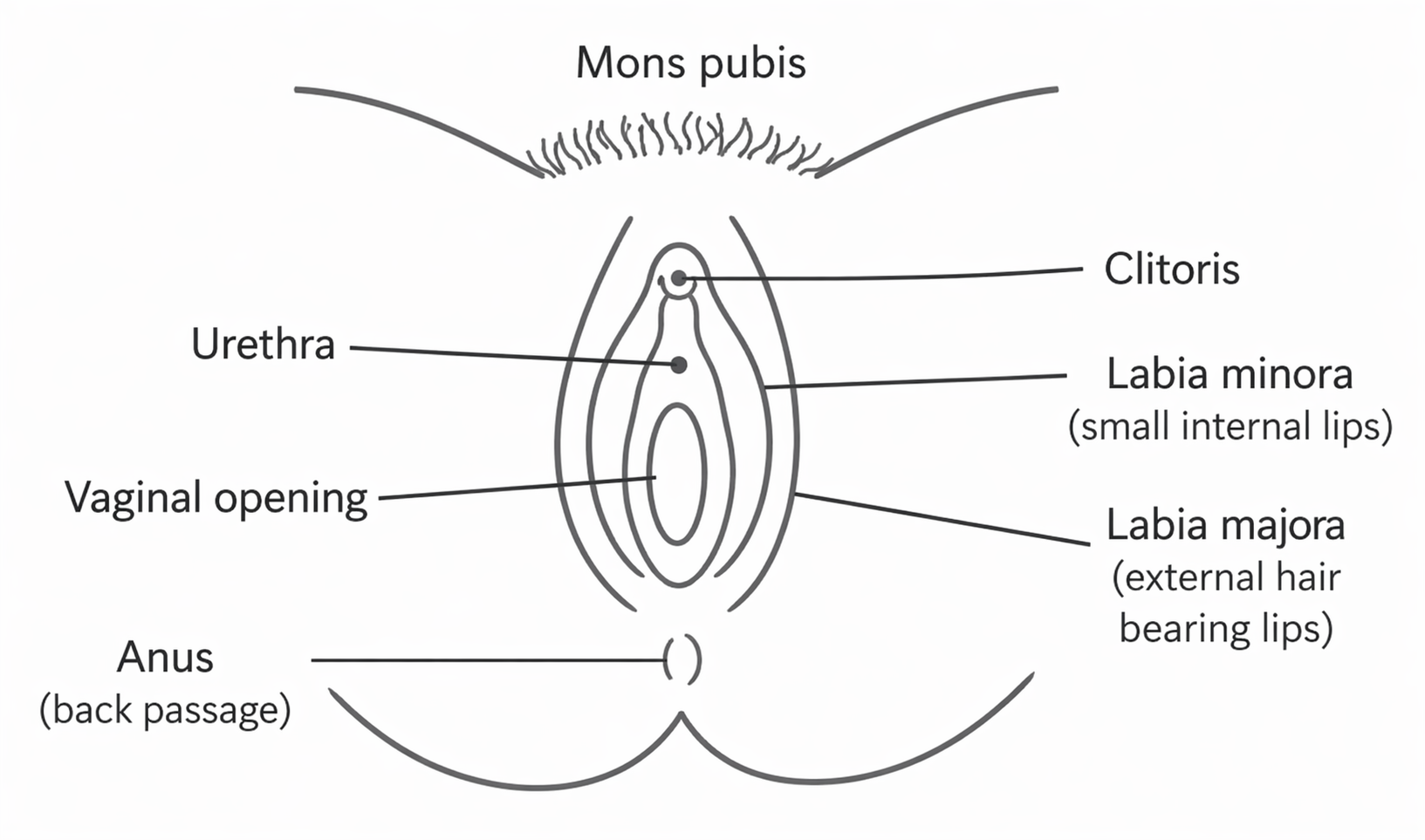
If you are comfortable, it is helpful to check the area yourself with a mirror. The self-examination diagram above labels the areas which you can inspect during your examination.
For further support with self-examination, ask for help from your medical practitioner or consult the self-examination area at www.vulvalpainsociety.org.
You should always let us or your GP know if you have any ulcer, warty areas or bumps which are not healing with treatment or are growing bigger.