


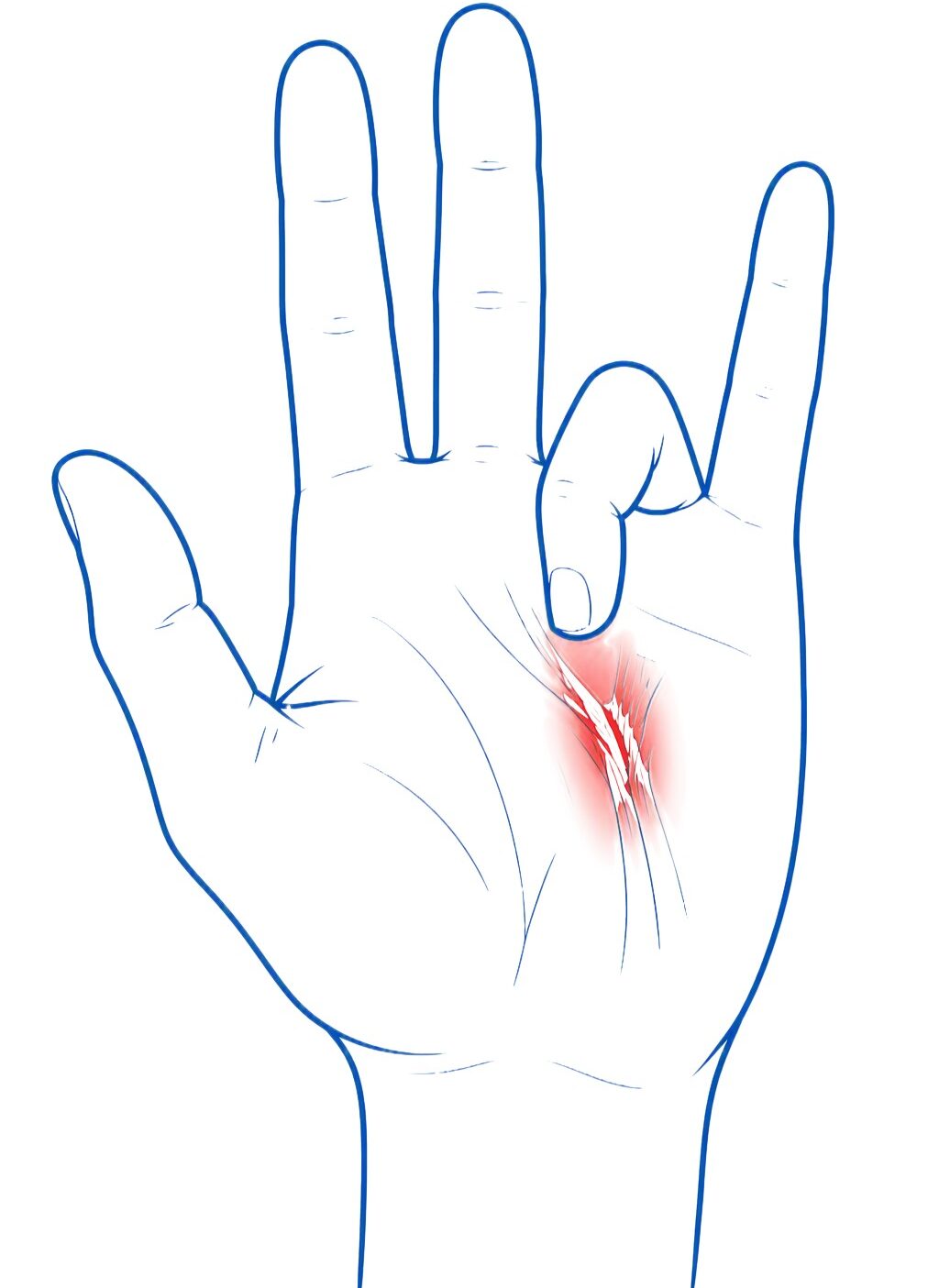
 Dupuytren’s contracture is a condition that causes one or more fingers to bend towards the palm of the hand. This page provides information and advice on caring for your hand and supporting your recovery following surgery to release the contracture.
In this we will give information on:
- Caring for your wound at home
- Use of your Splint
- Exercises to work on
- Precautions and things to avoid
Wound Care
It is important that following your operation that you take good care of the wound to your hand to help reduce the risks of infections and help promote healing.
It is key to always keep the dressing and wound on your hand dry. If the dressing was to get wet, you should get in touch with your GP or A+E for replacing of this. Please DO NOT do this yourself.
Each time you see us in physiotherapy we will change your dressing and check the wound. So there is no need to do this yourself unless instructed to do so.
Depending on your surgeon, the type of stitches used may differ:
- Dissolving Stitches: These will fall out on their own and do not require removal. Can take up to 14 days, but it can take longer in some cases.
- Non-Dissolving Stitches: If these are used, they will need to be removed. Your Physiotherapist can remove these, may be done by nursing staff also.
We ask that if you notice the following:
- Your dressing or wound is leaking lots of fluid that is not blood
- Is giving off an unpleasant smell
- You feel unwell or feverish
- Rashes
- New Sweats and or Shakes
We ask that you attend A+E for a review to check there is no infection. It is important that if you feel the above that you seek help.
Swelling
Swelling is very common post operations in any joint. It is not uncommon for our hands to hold onto swelling for longer than other areas. So, swelling may take some time to settle down following the operation.
It is important that when resting that you try keen your hand elevated higher than your elbow to help the swelling move away from your hand.
Your Splint
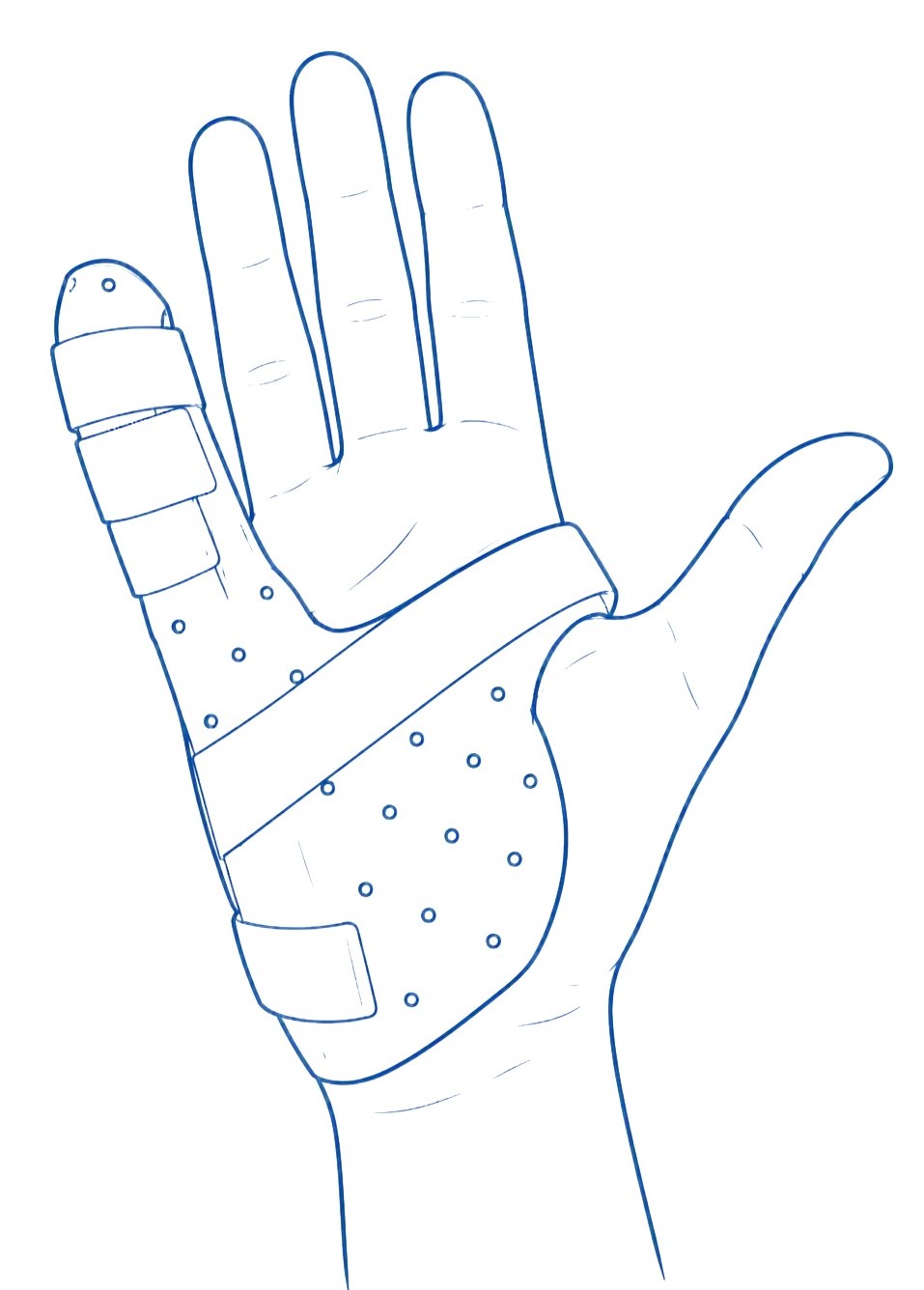 On your first appointment your Physiotherapist will make a custom splint moulded to your hand. This will be made from a Thermoplastic and is sensitive to heat.
As this splint is sensitive to heat you should keep it away from any heat source – radiators, showers, hot water.
It should be worn in bed when sleeping for 3 months.
The splint can sometimes cause some irritation to the skin or may dig into parts of your hand. If this happens, please let your therapist know and we can adjust it to ensure that it is more comfortable for you and not causing issue.
Please do not attempt to adjust or alter the splint yourself. It may look something like the this.
Exercises
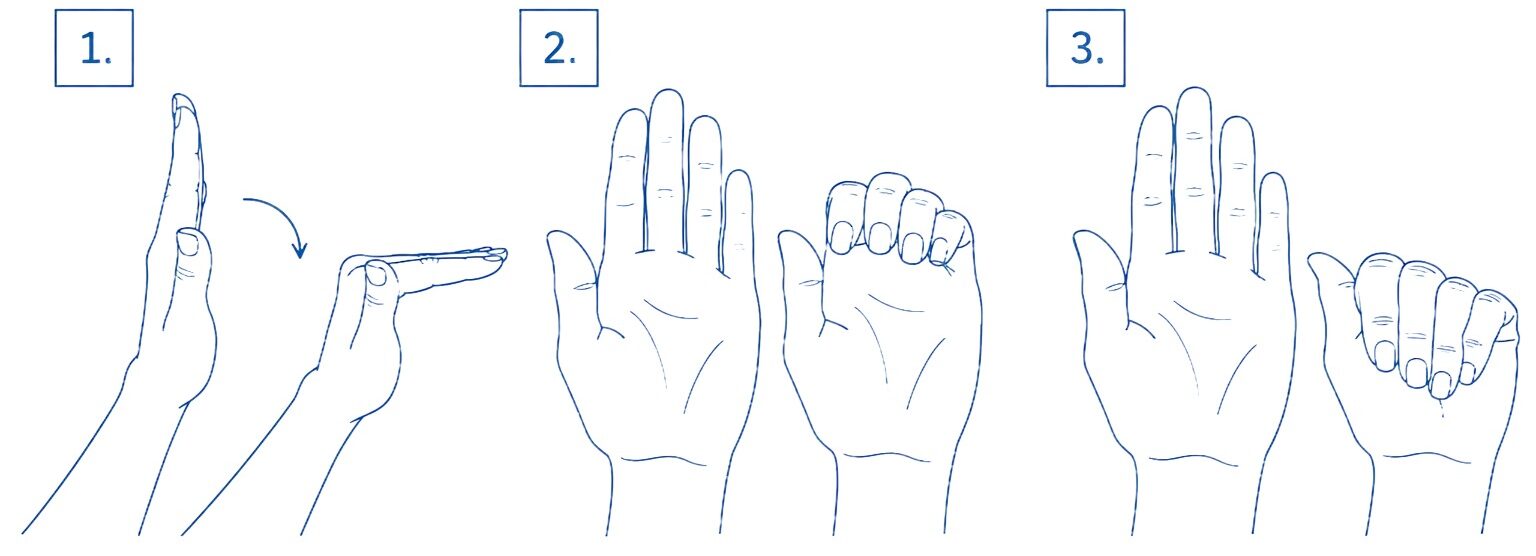
Below are the exercises that we ask that you try. They are to help with the movement of your fingers and can help reduce swelling in your hand.
Our advice from Orthopaedics is to move your fingers as much as possible to aid in restoring movements. This should be done Actively and Passively as your pain allows.
- Duck Flexion – Bend your fingers at your large knuckles trying to keep your fingers as straight as able.
- Hook Fist – Bend the top of your fingers down as if you were making a hook.
- Partial Fist – Bend your fingers so the pads of your fingers touch your palms.
- You may need to take painkillers to help with doing these exercises.
- You may feel that you wound may open when doing these.
- Our surgeons have said this is ok and we expect this.
Contact Information
MSK Physiotherapy Dept – Monday – Friday between 08:30 – 16:30
On weekends, please phone 111 if you feel you need assistance as the Physiotherapy Dept will be closed.
If you have any further information you’d like to discuss, please ask with your therapist.