


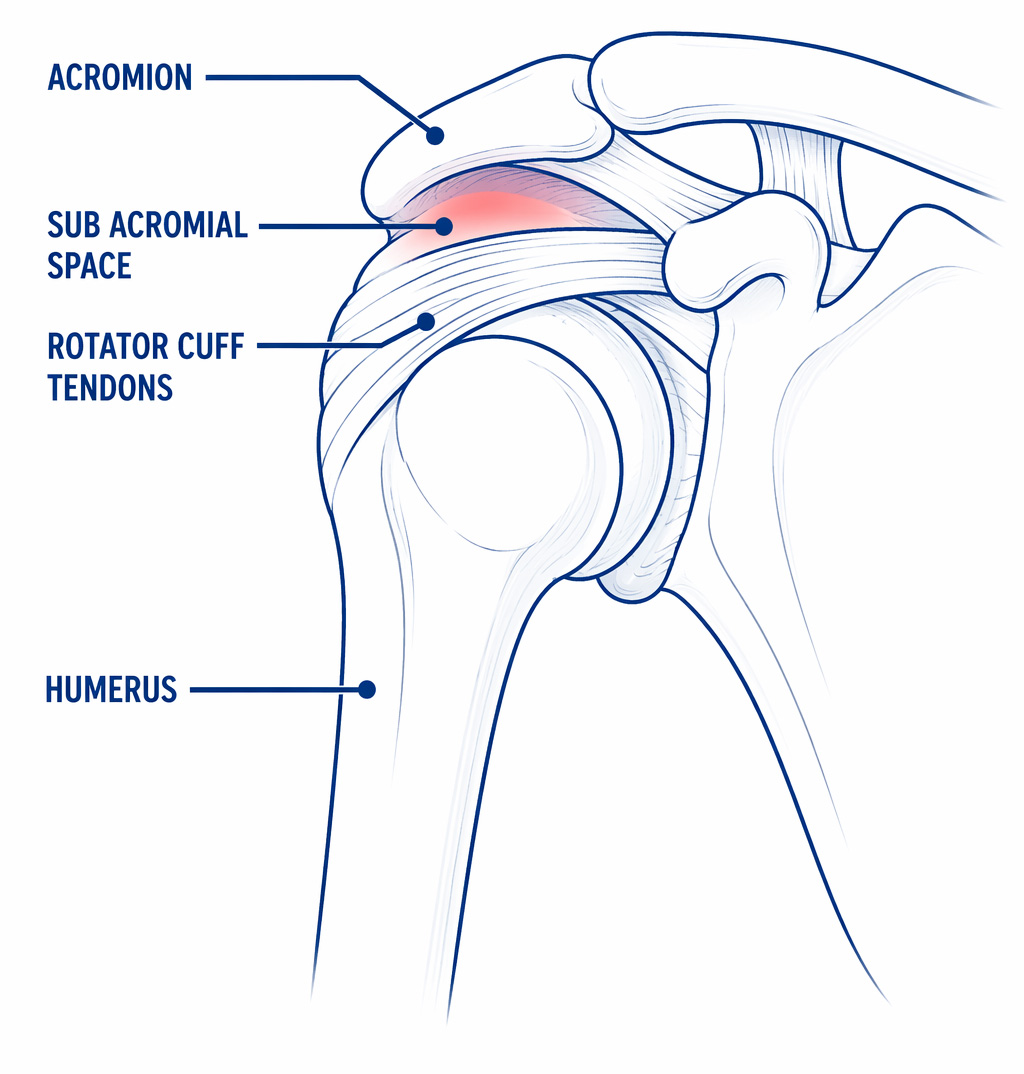
The shoulder is a ball and socket joint. The joint is made up from the arm bone (humerus), a shallow socket from the shoulder blade (scapula) and your collar bone (clavicle). There is a space above this joint called the sub acromial space.
Important muscles of the shoulder are the rotator cuff muscles. Many structures run through this space including the rotator cuff tendons, ligaments, and a fluid-filled sac (bursa).
Sub acromial pain syndrome (SAPS) is when one or more of these structures become irritated which can result in pain, reduced range of movement and weakness at the shoulder. The most common issue is when the tendons of the rotator cuff muscles become irritated. This may be for a variety of reasons such as overuse, age-related changes to the tendon, muscle weakness, obesity, smoking or other factors.
Sub acromial pain syndrome is an umbrella term for shoulder pain not necessarily specific to trauma. It may also be referred to as shoulder impingement, bursitis, calcific tendinitis, rotator cuff degeneration, a rotator cuff tear or a tendinopathy.
Symptoms of sub acromial pain syndrome
Symptoms vary but the most common are:
- A dull ache around the front or side of the shoulder that may move down towards the elbow
- Increased pain when lying on the painful side often resulting in disturbed sleep
- Weakness or pain when lifting or reaching the arm
- A sharp/catching pain when moving the arm away from the body particularly when lifting the arm above shoulder height. For example when putting on a coat or brushing your hair.
How common is sub acromial pain syndrome?
Shoulder pain is the third most common complaint in physiotherapy with sub acromial pain being the most common cause. It mostly affects people between the ages of 35 and 75. It is estimated that in 1 year 7% – 30% of the population will experience shoulder pain.
Causes of sub acromial pain syndrome
The cause of sub acromial pain can be from multiple factors. These can be:
Internal factors involve gradual changes occurring within the shoulder such as
- Age related changes – As we age our tendons can naturally develop small tears which leads to reduced muscle control at the shoulder and increased contact between the humerus and acromion process.
- Muscular weakness – The rotator cuff muscles are the main muscle group that controls the movement between the humerus and the scapula when moving your arm from your body. If there is weakness that means there is less control over this movement which may results in compression of the structures at the sub acromial space.
- Physical factors – This refers to the natural shape of your acromion bone. If it is hook or curve shaped it may lead to reduced joint space and therefore pain when the arm moves causing the joint space to narrow further. This may be a cause in a very small percentage of people with Sub Acromial Pain.
External factors involve changes to the shoulder tendons due to outside forces being placed on the shoulder such as
- Sudden increase in use of shoulder – Increased demand on the tendon remains the most common reasons for SAPS for example decorating a room in a short period of time.
- Changes in posture may reduce the sub acromial space present
- Constant increase in the use of your arm may lead to small tears in the tendons for example heavy lifting as part of your job or hobbies. This results in weakness and reduced control at the shoulder thereby increasing contact between the humerus and acromion process.
Other risk factors for developing SAPS include:
- Diabetes
- Rheumatoid arthritis
- Smoking
- Obesity
- Unhealthy lifestyle
- Sustained use of the shoulder in an overhead position
- Depression/Anxiety
- Poor sleep
How can I help with sub acromial pain syndrome
In the past when you hurt your shoulder most people wore a sling to rest it and allow it to heal. With the knowledge we have now we no longer advise patients to do this as keeping the shoulder moving is often the best treatment. Generally, slings are now only worn to allow a broken bone to heal.
If you have recently injured your shoulder it might be helpful to reduce the amount you carry or reach for on a daily basis to allow the pain to settle.
It is important to keep your arm moving to avoid stiffness and weakness developing. There are ways you can change your daily activities to allow your shoulder to move without making your pain worse.
Pain activity ladder
By following the pain activity ladder you can identify activities that you would consider severely painful, moderately painful and mildly irritating and act to change your habits.
The pain scale, most often used in healthcare, measures pain from 0-10 (zero being no pain and 10 representing the worst pain you could imagine).
If you can identify the level of pain you are experiencing, you will find out if you are in the green, amber or red zone. The best way to move down to the green zone is by pacing and spacing your activity.
When you are completing your rehabilitation exercises it is often best to work within the green (and sometimes amber zones depending on what you deem is an acceptable level of pain) both during the exercises and within 48 hours of completing your exercises. If you find yourself in the red zone you are likely pushing yourself too hard and may flare up the pain.
Pacing and spacing
Pacing and spacing methods can help you manage your pain better.
Pacing is the term used for breaking down an activity or task. This can be done by taking regular breaks. Prioritising daily activities can also help. This can prevent “over stimulating” your pain system.
When completing challenging tasks or activities, it may be useful to set a “baseline”. This is the amount you can manage on a good or bad day without increasing your symptoms. Therefore, you can plan rests and set achievable goals.
Lifestyle adaptions
Making some lifestyle changes could also be helpful. We have included some examples of ways you can do this below:
- If your pain gets worse at work and your job involves repetitive movement it may be a good idea to talk to your manager about short-term changes to duties until you feel better.
- When putting on your jumper or coat place the painful arm in the sleeve first and then the non-painful arm.
- If you enjoy a couple of cups of tea a day, why not move your cup to a lower cupboard instead of reaching to the higher cupboards?
- If you enjoy the gym, you could avoid over-head weightlifting whilst you complete your specific shoulder exercise and maybe focus on other aspects of your general fitness.
- It is important to also eat a healthy diet. Make sure you get a good night’s sleep for your general wellbeing, especially when you are in pain.
When to speak to a professional
If you display any of the symptoms listed below you will need to speak with your GP urgently.
Signs and symptoms
- Trauma, pain and weakness, or sudden inability to raise the arm
- Any shoulder mass or swelling
- If you feel generally unwell, have a fever, swelling, redness or heat at the shoulder joint
- Any trauma leading to loss of function and/or changes to the shape of the shoulder
- Inflammation in several joints e.g. early morning stiffness lasting more than 30 minutes and pain in more than two joints
- If you are experiencing systemic symptoms such as fever, night sweats, weight loss or new respiratory symptoms (for example a new, persistent cough)
- If you are experiencing unexplained muscle wasting and difficulty with movement or sensation
A very small amount of people with this condition (Approximately 5%) who do not improve with physiotherapy input may be considered for surgery. Often patients who have surgery will achieve the same results as patients who only had physiotherapy. Surgery comes with risks and in the case of sub acromial pain, the risks may outweigh the benefits.
Making positive changes to how you live and exercises are proven to be better than surgery for the majority of people.
If after following the above advice, your symptoms have not improved within 6 to 12 weeks, a referral to a physiotherapist may be beneficial. Speak to your GP about a referral.