


Posterior tibialis tendinopathy is a condition which starts with pain and inflammation around the inside of your foot, specifically around your instep/arch and the inside of your ankle.
The Posterior Tibial tendon is important in supporting the arch of your foot during weight bearing activity.
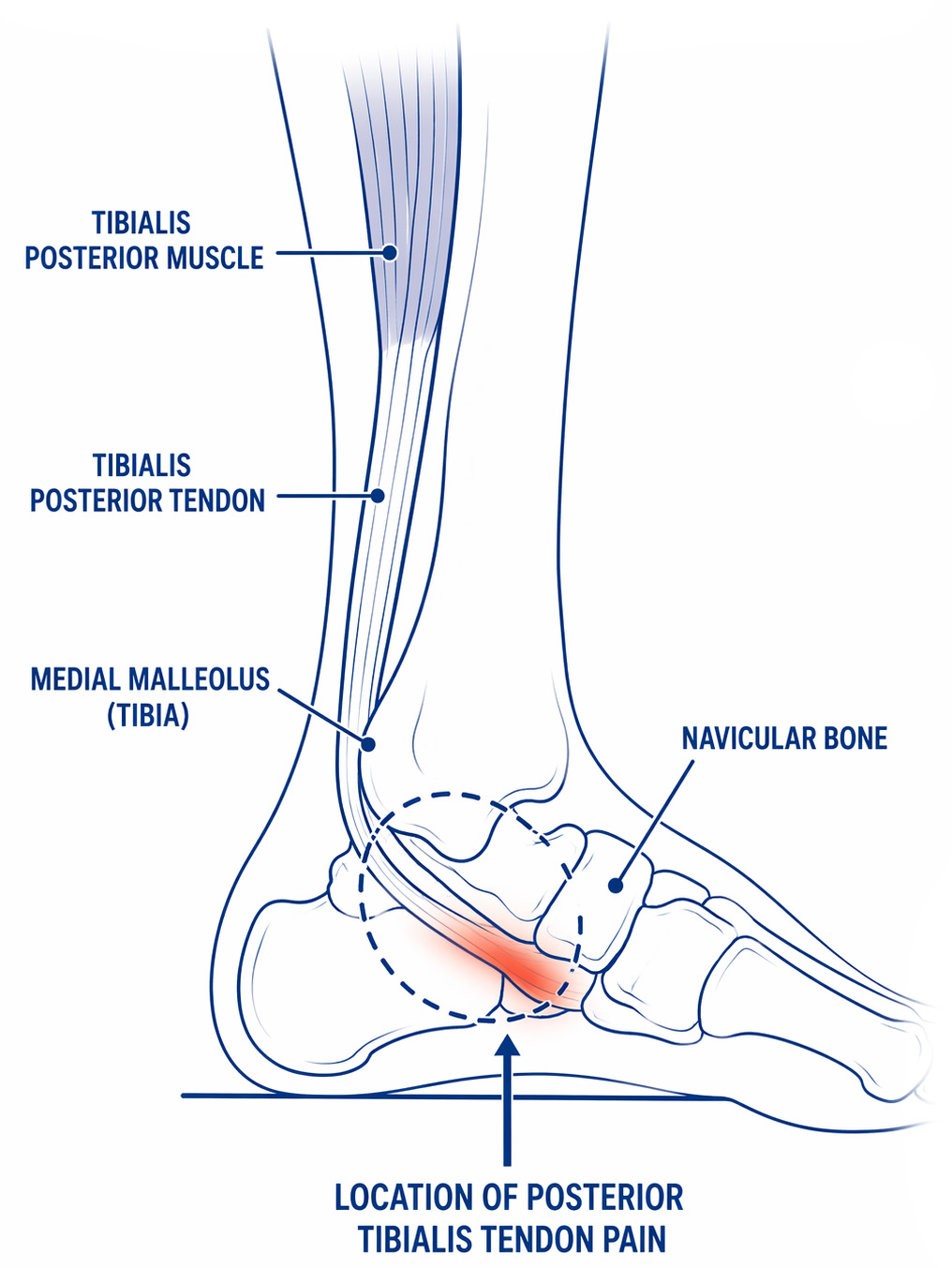
What are the symptoms of posterior tibialis tendinopathy?
- Pain around the inside of the ankle and lower leg where the tendon runs. This is often sore if you apply pressure to the area with a finger.
- Pain on performing a single leg heel raise. Mild weakness on a single heel raise – unable to go right up onto your tiptoes. Some people may not be able to perform a single leg heel raise.
Pain during walking, running or jumping with symptoms easing at rest.
How common is posterior tibialis tendinopathy?
The condition affects between 3.3% – 10% of the population. It is more common in women aged between 40-50 years and usually affects only one foot. You may find this pain increases with running, jumping or even walking.
What causes posterior tibialis tendinopathy?
It is thought to be caused by repetitive stress and small injuries to the tendon as a result of a sudden increase in activity.
Repetitive stress and small injuries causes the normal healing response of the tendon to slow. This can result in injuries occurring within the tendon at a rate faster than the body can heal them. This can then lead to weakening of the tendon. A weakened tendon can be more vulnerable to injury.
Other contributing factors:
- Older age
- Being overweight
- Diabetes has been linked to increased risk of developing Posterior Tibialis tendinopathy
- Inflammatory conditions i.e. rheumatoid arthritis, psoriatic arthritis etc
- Weakness and/or tightness in the muscles within your feet or leg
- Wearing unsupportive footwear such as sandals
- Spending long periods of time standing, walking or running, especially with a sudden increase in these activities
- Poor exercising or training technique and lack of recovery between activities
- Prolonged use of oral corticosteroids and a certain family of antibiotics (fluoroquinolones)
- Previous foot and ankle surgery or injury
- High impact sports
- Smoking
What can help?
Helpful tips
The advice below is focused on helping you get back to normal activity. The great news is that most people’s symptoms improve. Tendons can be slow to heal so it may take several months to get better.
If you have any of the above contributing factors that can be changed it is important that you make the necessary changes to your lifestyle to help aid your recovery.
The way in which you manage the load through the tendon will be key to the healing process. You must reduce the load by increasing the strength of the tendon and then gradually build up the muscle/tendon to get back to where you were before your symptoms.
Footwear
Changing to comfortable running style trainers/shoes or hiking boots with a slight heel will provide the best support for the posterior tibial tendon.
Avoid wearing hard, flat or unsupportive footwear. Very flat shoes may aggravate your symptoms especially if you also have tight calf muscles. It is important to note that shoes that have flexible soles generally offer the foot less support and can increase the stress in the soft tissues of your foot and ankle. If your footwear has shoelaces make sure they are tied properly.
Timescales/Prognosis
Your symptoms should start to improve within 6 to 12 weeks of following this advice. Not everyone will improve quickly and for some it could take six to nine months of focused rehabilitation to make a pain free return to full activities.
It should be noted that it is normal to have periods of increased pain or flare up during your recovery.