


Greater trochanteric pain syndrome (GTPS) is a common condition characterised by pain along the outer side of your hip/thigh/buttock. This is usually caused by an injury or irritation to the soft tissue structures(muscles/tendons/bursa) that lie over the top of your outer thigh bone.
GTPS was traditionally more commonly known as hip/trochanteric bursitis as it was thought that pain was mainly related to inflammation of the bursa (fluid-filled sac that cushions between bone and tendons). Research has shown that pain in this area is due to small (and often repetitive) injuries to the gluteal (buttock)muscles and tendons (usually gluteus minimus and gluteus medius). This can cause what is called gluteal tendinopathy.
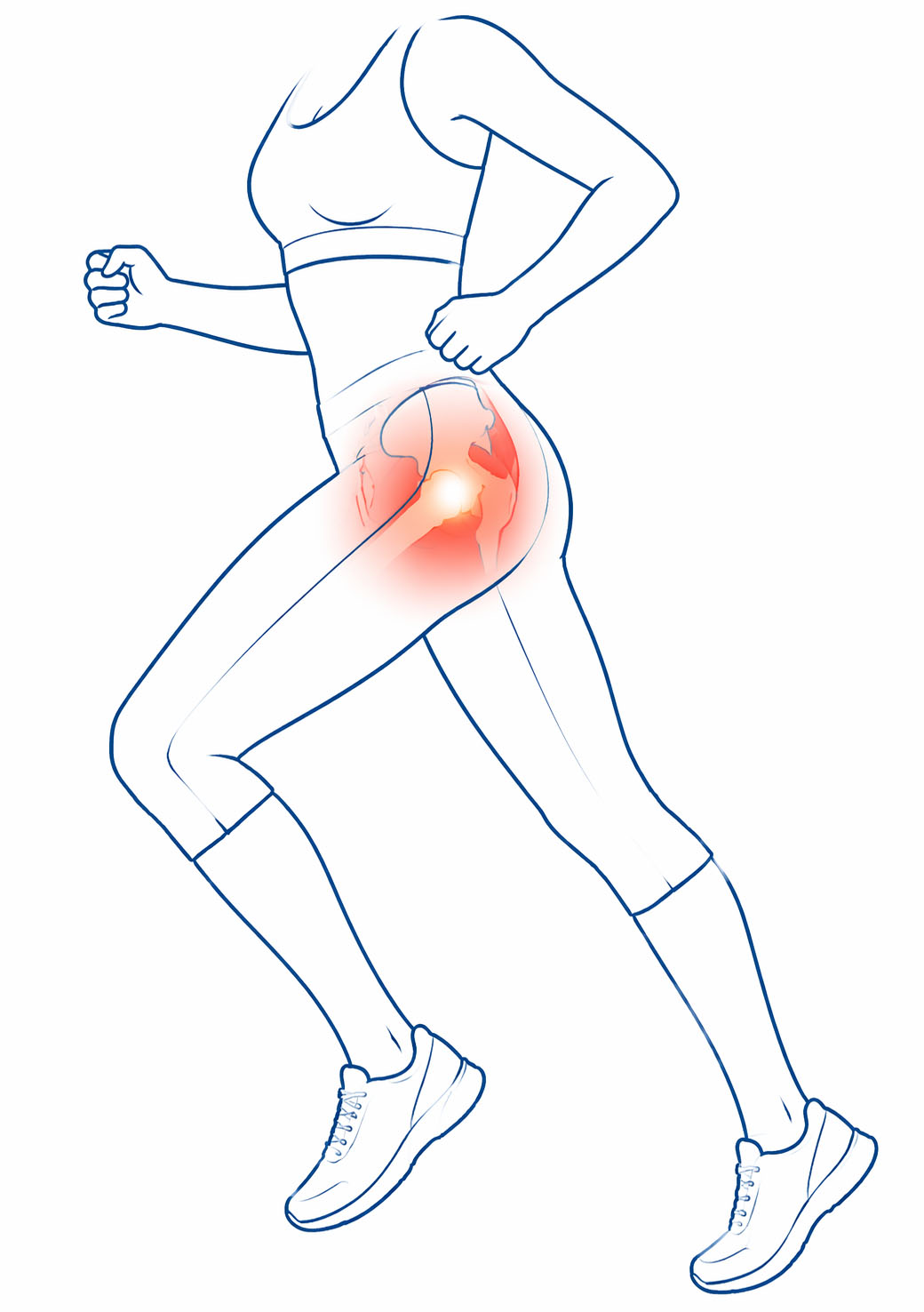
Symptoms of GTPS
Pain is felt on the outside of your hip/thigh/buttock area.
Symptoms can vary for different individuals but you may commonly experience pain with one or more of the following:
- Lying on your side
- When you are walking
- Climbing the stairs
- When you are standing on the affected leg for prolonged periods
- After longer periods sitting
- When you stand up after sitting
- Crossing your legs
- With a smaller amount of physical exercise or activity than you are normally able to do
How common is GTPS?
You are more likely to develop GTPS if:
- You are female (4 times as many women get GTPS than men)
- You are aged between 40-60 years old
- Up to 35% of people with lower back pain will also have GTPS
It’s quite common- between 20-25% of the population will have it at some point in their lives.
What causes GTPS?
There are a number of different factors that can contribute towards developing GTPS. These will vary from person to person but common causes are:
- A fall on to your hip
- Excessive/sudden increase in physical activity or repetitive movements
- Crossing your legs
- Sitting for long periods
- Sitting in chairs that are too low
- Standing/weight bearing more through one leg for longer periods
- Reduced strength of the muscles around your hip
- Secondary to osteoarthritis of the hip/knee
- Having low back pain
- Morphology (Shape) of the pelvis
- Being overweight
- An inactive lifestyle
Combinations of the above may lead to the development of GTPS as they put more repetitive friction/stress and weight through the gluteal muscles, tendons and bursa.
What helps the condition?
Timescales/Prognosis
GTPS responds very slowly to treatment. On average it can take 6-9 months and, in some cases, longer for your symptoms to improve. You need to have patience and ensure that you follow the steps outlined below.
The initial and most effective approach to treating GTPS involves taking the following steps.
- With guidance from your, GP or Pharmacist take medications to manage the pain
- Balance your physical activity levels at work and home
- Modify your day to day activities and avoid repetitive (provocative) movements
- Do exercises to strengthen the muscles of your hip
- Maintain a healthy body weight
- Manage other health conditions that you have
In a small number of people with GTPS, surgery and corticosteroid injections may be considered. However, research has showed these to be less effective in improving the symptoms and are only considered when all the above steps have failed.
Pain management
- Try to keep active and continue gentle exercise. Avoiding all activity can make the pain worse over time. Continue to exercise as long as it is not making the pain worse.
- Try to stay at work, speak with your employer and modify your duties if necessary.
- To manage pain, you can apply ice wrapped in a towel directly on the area for up to 20mins.
- The use of painkillers and anti-inflammatory medications can be used as advised by your pharmacist or family doctor (GP).
- In extreme cases or cases which do not get better with time and exercise, corticosteroid injections may be used. This can be discussed with you Physiotherapist or GP
Helpful tips
It’s good to keep active, however if activity is making symptoms worse avoid overdoing it.
- You could try using a pedometer to monitor how many steps you take each day. Keep a diary on how you feel based on how many steps you have taken. Try to reduce your steps if it makes your pain worse. Over time try to slowly add the steps back in.
- If exercises if flaring up your symptoms then try to make some changes. First try reduce how much exercises you are doing, try to slowly reintroduce that exercises over time. Also consider different forms of exercise such as swimming or cycling which may put less stress on your hip.
Try to be mindful of your postures and body positions during the day.
- Avoid sitting with legs crossed for long periods
- Avoid sitting with knee wide apart or too close together for long periods
- Try to change positions frequently throughout the day
- Avoid standing with your weight on the on leg or pushing one hip out to the side
- Avoid very low chairs
- When going up stairs take one step at a time or use hand rail if needed.
- Limit walking up steep hills where possible
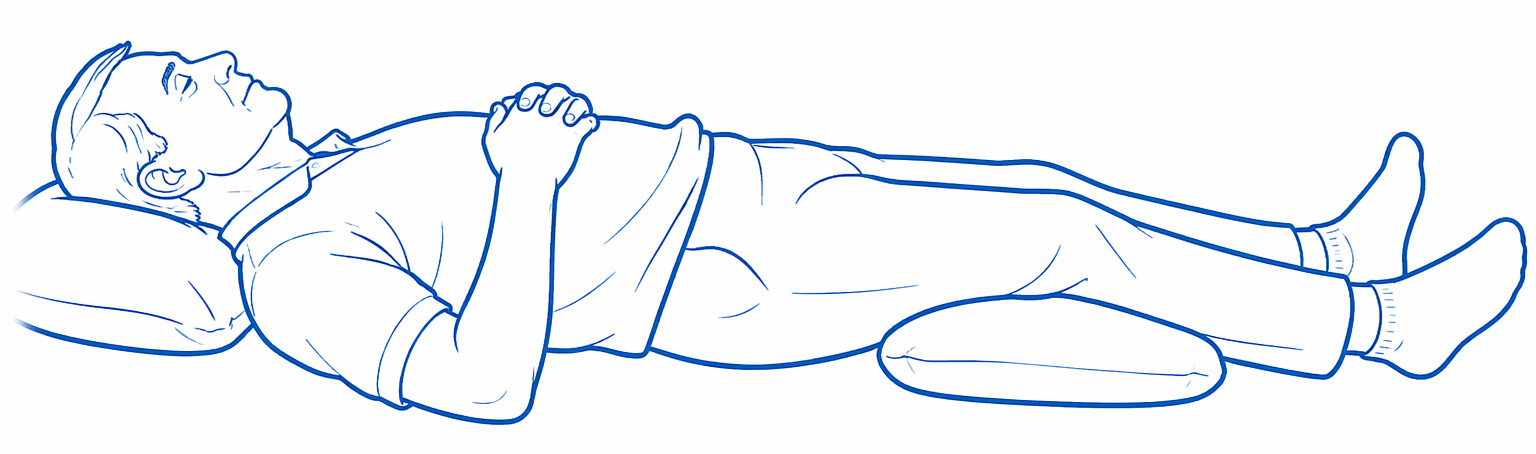
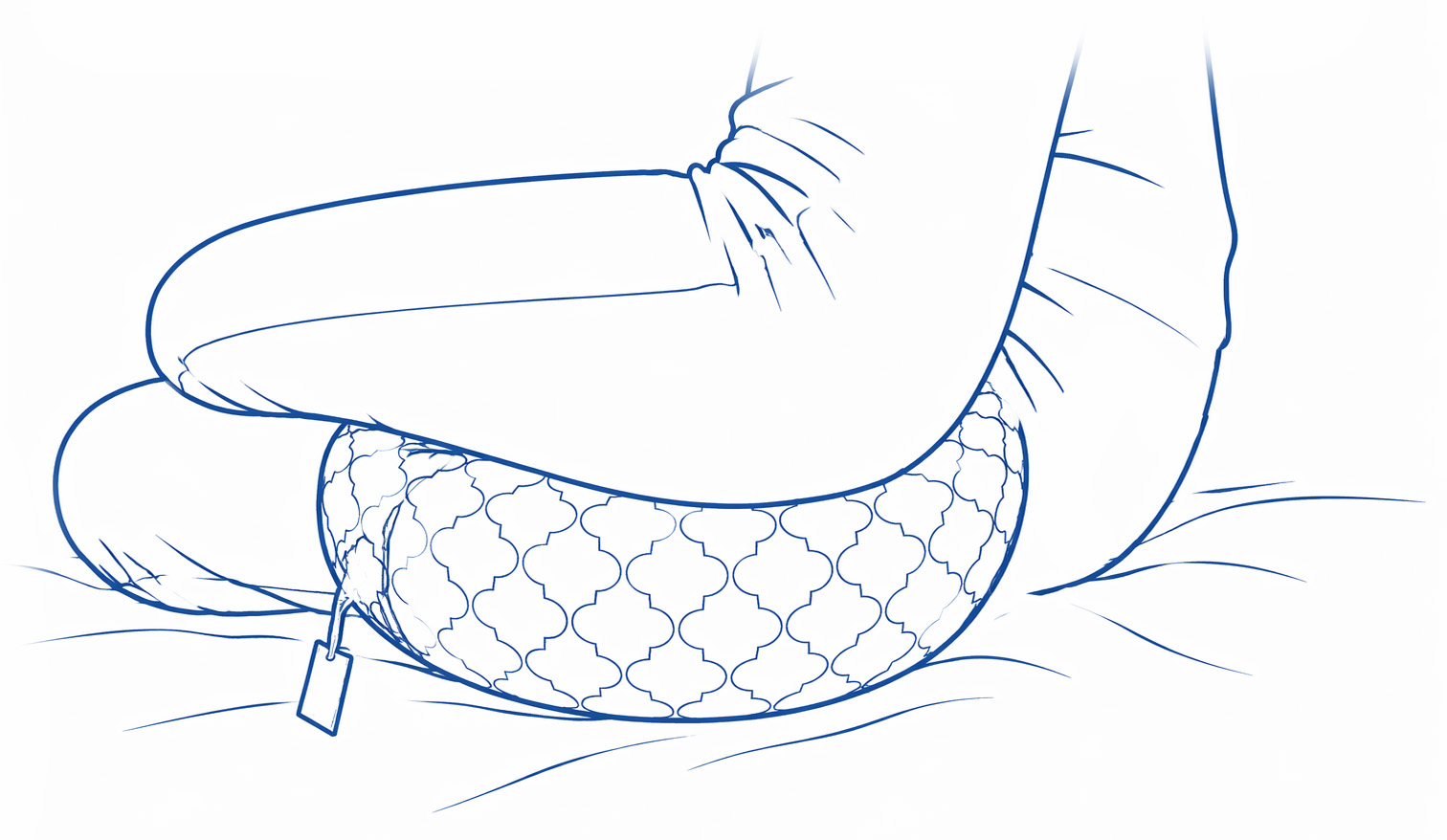
Sleeping positions can causes discomfort at night. Try out the following positions and find the most comfortable.
Try laying on your back with pillow under your knees (illustrated below) to relieve pressure from your hip.
Try laying on your side with painful side up and pillow between your legs (illustrated below).
Pain activity ladder
By following the pain activity ladder you can identify activities that you would consider severely painful, moderately painful and mildly irritating and act to change your habits.
The pain scale, most often used in healthcare, measures pain from 0-10 (zero being no pain and 10 representing the worst pain you could imagine).
If you can identify the level of pain you are experiencing, you will find out if you are in the green, amber or red zone. The best way to move down to the green zone is by pacing and spacing your activity.
When you are completing your rehabilitation exercises it is often best to work within the green (and sometimes amber zones depending on what you deem is an acceptable level of pain) both during the exercises and within 48 hours of completing your exercises. If you find yourself in the red zone you are likely pushing yourself too hard and may flare up the pain.
Pacing and spacing
Pacing and spacing methods can help you manage your pain better.
Pacing is the term used for breaking down an activity or task. This can be done by taking regular breaks. Prioritising daily activities can also help. This can prevent “over stimulating” your pain system.
When completing challenging tasks or activities, it may be useful to set a “baseline”. This is the amount you can manage on a good or bad day without increasing your symptoms. Therefore, you can plan rests and set achievable goals.
If after following the above advice, your symptoms have not improved within 6 to 12 weeks, a referral to a physiotherapist may be beneficial. Speak to your GP about a referral.