


The temporomandibular joint or TMJ, is the joint which joins your jaw bone to the rest of your skull. You can feel it just in front of your ear hole. It can be painful for many reasons including poor posture, bad habits, growth disorder or injury and inflammation.
This page is designed to inform you and help manage the pain from your jaw.
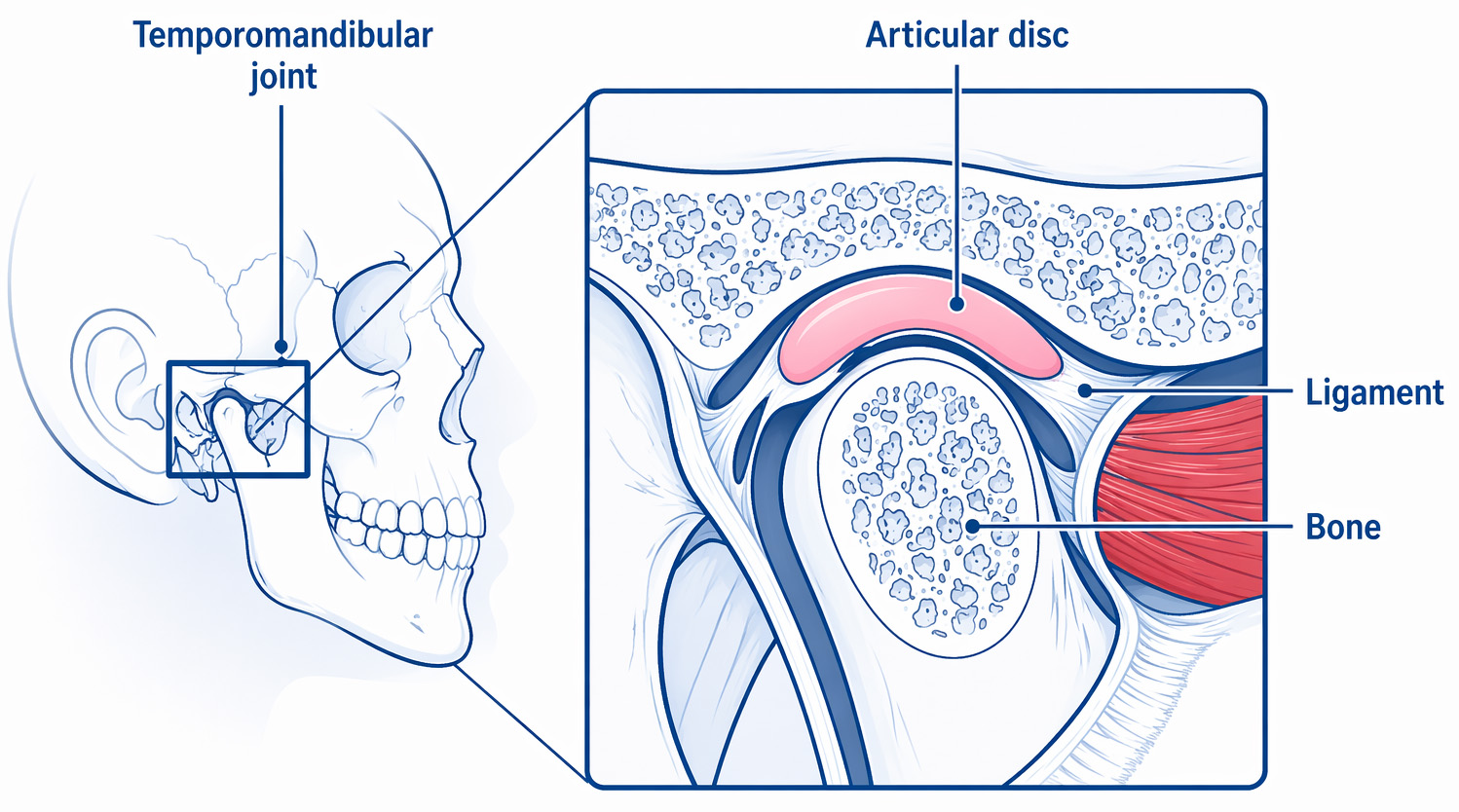
The TMJ is made up of the lower jaw bone (mandible) and the socket on the skull (temporal bone). There is a disc in between these two parts to allow the joint to open and close smoothly. This is held in place with muscles and ligaments.
What are the signs and symptoms of dysfunction?
- Pain in the jaw joint or facial muscles
- Clicking / grinding / locking in the jaw
- Headaches and dizziness
- Difficulty opening and closing the mouth
- Pain when chewing on hard food or yawning
What causes TMJ pain?
There is normally a combination of causes which can lead to pain or symptoms:
- Overactivity of the jaw muscles – sometimes from continuous grinding of the teeth
- Trauma – a blow to either the joint or the jaw bone
- Arthritis
- Stiffness or dysfunction in the neck
- Sensitivity to stress-related pain
What are the aims of physiotherapy?
- To reduce pain
- To minimise stiffness
- To restore function
- To teach management strategies
Advice
- Massage the muscles around the joint
- Use heat or ice for 10 minutes to reduce pain
- Discuss pain relief with your doctor
- Exercise your jaw regularly with guidance from your physiotherapist
- Consult your dentist to check if you are grinding your teeth at night
- Cut up food into smaller pieces
Avoid:
- Hard, crunchy and chewy foods such as apples or whole fruits, carrots or corn on the cob
- Chewing gum, pencils or your nails
- Opening your mouth widely – stifle yawns or use your fist to support your chin as you yawn
- Resting your mobile/telephone handset between your shoulder and ear
Posture and neck movement
Sometimes the pain can be made worse by sitting or lying badly, holding your jaw in a bad position or by straining/craning your neck. A stiff neck can also cause pain to be felt in the TMJ.
Having an awareness of correcting this posture and keeping your neck mobile and strong can help with your symptoms.
Consult your physiotherapist for further information.
Exercises
1. Relaxed Jaw Position
Place the tongue lightly on the roof of the mouth behind your upper front teeth, relax the jaw muscles and allow the teeth to come apart.
2. “Goldfish” exercise (partial opening)
- Keep the tongue on the roof of your mouth
- Place the index finger on the TMJ
- Place your other finger on your chin
- Allow your lower jaw to partially drop down and back with the help of the index finger
- Look in a mirror to make sure the jaw stays straight
Repeat 6 times, 6 times a day

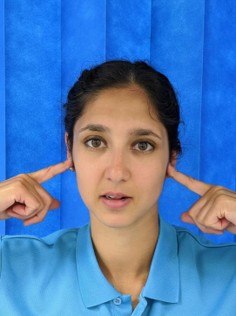
3. “Goldfish” exercise 2 (partial opening)
- Keep tongue on the roof of the mouth
- Place one finger on each TMJ
- Allow the lower jaw to partially drop down and back to bring the chin towards the throat
- Monitor this partial jaw opening in a mirror to make sure the jaw stays straight
Repeat 6 times, 6 times daily
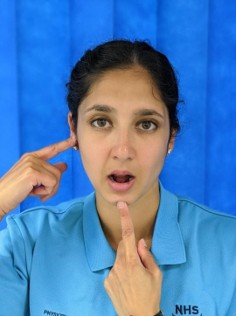
4. “Goldfish” exercise 3 (full opening)
- Keep tongue on the roof of the mouth
- Place one index finger on the TMJ
- Place your other finger on your chin
- Allow the jaw to fully drop down and back with help from the index finger
- Monitor alignment in a mirror
Repeat 6 times, 6 times daily
5. “Goldfish” Exercise 4 (full opening)
- Keep tongue on the roof of the mouth
- Place one finger on each TMJ
- Allow the lower jaw to fully drop down and back to bring the chin to the throat
- Monitor this full jaw opening in a mirror to make sure the jaw stays straight
Repeat 6 times, 6 times daily

6. Mandibular stabilisation exercises
- Maintaining the jaw in a neutral position, apply gentle pressure to your jaw using your index finger/thumb on:
- Opening
- To the left
- To the right
Hold for 2 seconds, repeat 5 times, 6 times a day

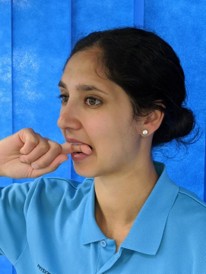
7. Mandibular stabilisation exercises (advanced)
- Place knuckle of index finger between top and bottom teeth
- Remove it, keeping the teeth separated one knuckle apart
- Apply gentle pressure to the jaw using your index finger/thumb as demonstrated in the pictures
Hold for 2 seconds, repeat 5 times, 6 times a day
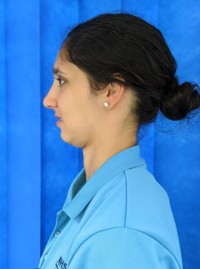
8. “Chin Tucks” Cervical retraction
- Standing or sitting with shoulders back and chest up, bring your chin straight back, creating a “doublechin”.
Do not allow your head to bendup or down as you do it.
Hold for several seconds, repeat 5 times, 6 times a day
9. Active – assisted stretch
- Slowly open as wide as comfortable
- Assist opening with index finger and thumb “scissor action”
- Keep movements slow without pain or force
Hold for several seconds, repeat 5 times, 6 times a day

10. Self manipulation
- For closed lock on the right side (jaw painful on the right and movement limited to the left)
- Using your right hand, place your thumb on the right side of your jaw and fingers over the left cheek
- Gently apply pressure with your thumb and fingers towards the left (away from the painful side)
Hold for several seconds, repeat 5 times, 6 times a day

If after following the above advice, your symptoms have not improved within 6 to 12 weeks, a referral to a physiotherapist may be beneficial. Speak to your GP about a referral.