


Frozen shoulder is a condition which affects the lining that surrounds the shoulder joint, which is called the capsule. This becomes inflamed, which is painful and the shoulder also stiffens up.
Key points:
- A frozen shoulder is a painful stiff shoulder
- People often experience significant pain and very restricted movements; the pain can last for between two and nine months
- It can take anywhere between 12 and 42 months to fully resolve
- Most of the care is about pain control, accepting the limitations and waiting for it to get better
- Physiotherapy and shoulder injection can be helpful for some people
- Some people whose symptoms do not improve may need to have surgery
The capsule thickens over time which limits movement. When it does start to improve it tends to be a slow process but your shoulder may always have some movement restriction in the future. Although the pain usually gets better, it may never go away completely.
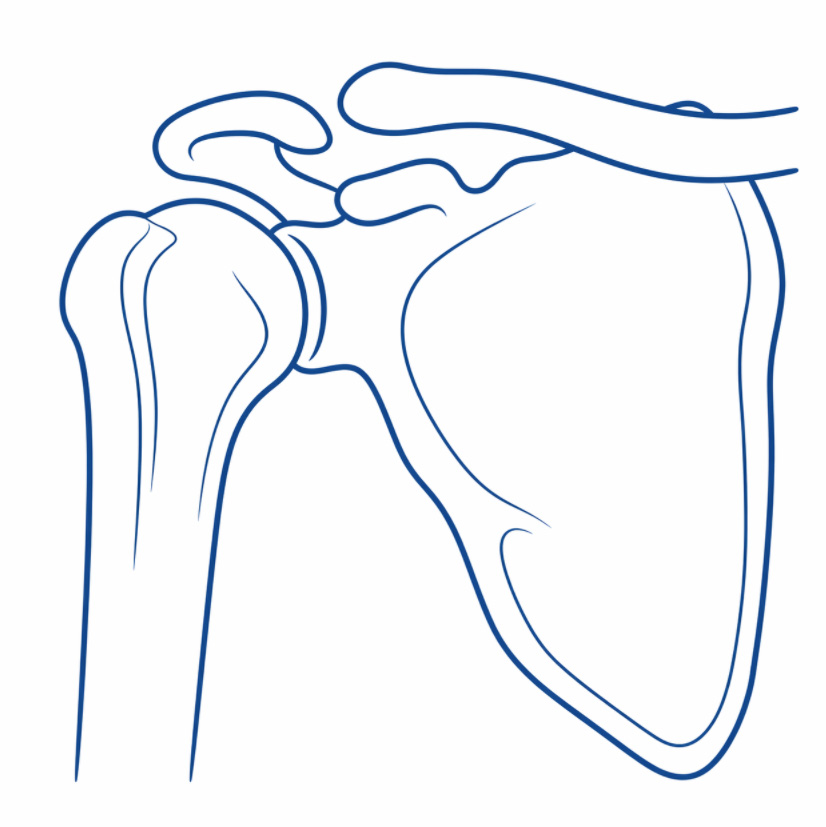
Shoulder joint
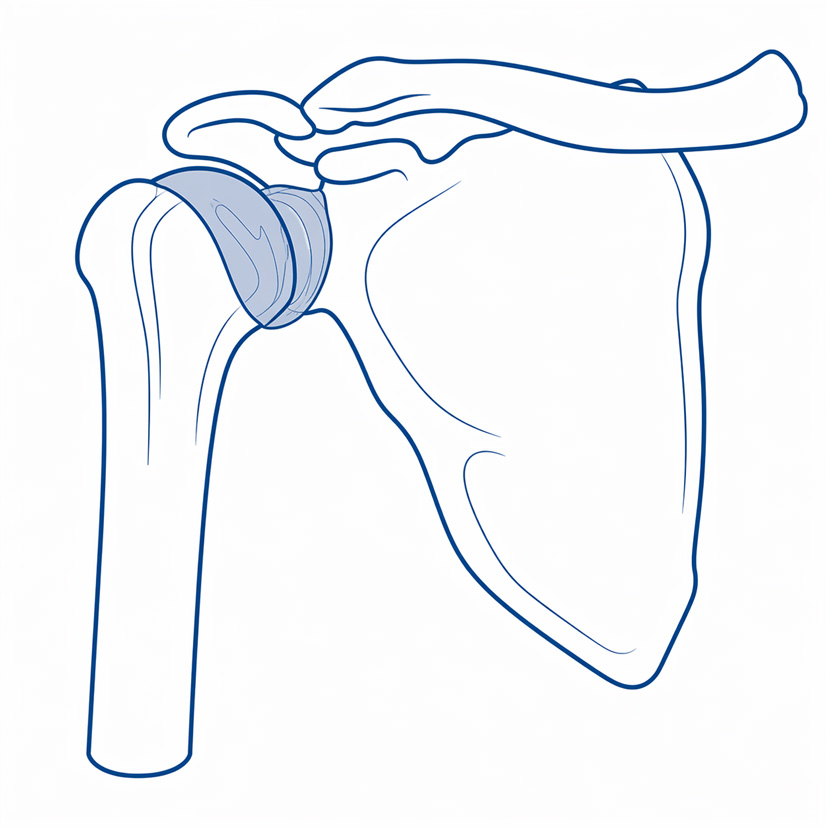
Thickened shoulder capsule
What are the symptoms of a frozen shoulder?
- Pain in the shoulder and upper arm
- The pain can be severe and tends to be constant, which can interfere with your sleep
- Pain can be a lot worse on reaching for things or when lying on that side
- The shoulder may stiffen up quickly
- The restricted movement can stop you putting your hand behind you, or being able to reach as far as the back of your head
How common is a frozen shoulder?
- It is quite common in people aged 40-60 and more common in people who have diabetes or cardiovascular disease.
What causes a frozen shoulder?
- We don’t know. Sometimes a specific event will happen that results in a frozen shoulder, like an injury or a recent surgery. Most of the time there is no obvious cause.
Will it affect the other shoulder?
- About 10% of people can expect to experience symptoms in their other shoulder in the future. This risk is higher in people with diabetes.
What can help with a frozen shoulder?
No one treatment has been shown to cure a frozen shoulder and on average a frozen shoulder can last about two and a half years.
What can you do to control the symptoms?
The aims of treatment are:
- Pain relief
- Improving range of motion
- Reducing duration of symptoms
- Returning to normal activities
Shoulders are designed to move and inactivity is harmful to the tissues around the joint. With a frozen shoulder pain doesn’t equal damage therefore maintaining movement within the limits of your pain is important. However, you may want to avoid doing tasks that aggravate your pain too often. Adjusting how you do certain tasks can help manage your pain, for example, putting your sore arm in first to a jumper or jacket and taking it out last.
Treatment options for a frozen shoulder
Corticosteroid injection
Steroid injections into the joint (+/- local anaesthetic) may be offered. It can be difficult to predict how much this might help and any relief they give is generally short term.
The physiotherapist will advise you on when to re-start the exercises after you receive the steroid injection. A second injection may be required in a small number of cases.
Injections may not be suitable for every person.
Distension arthrogram or hydrodilatation
These are similar procedures and involve injecting a volume of fluid into the shoulder joint to stretch the capsule. Not all people are suitable for these procedures, and these treatment options are not always available in all hospitals. The results are variable and not everyone gets significant improvement from them.
Manipulation under anaesthesia (MUA)
This involves direct physical manipulation of the shoulder under general anaesthetic to hopefully improve the movement.
Surgery
An arthroscopic (keyhole) capsular release uses a camera in the joint to guide the release (cutting) of some of the thickened capsule. Surgery is not a reliable way to make the frozen shoulder go away but can sometimes help. If the pain associated with frozen shoulder remains severe for a long time, surgery may be discussed as an option.
What are the risks of surgery?
Risks include infection, nerve injury, bleeding and fracture of the humerus bone. A general anaesthetic is usually fairly low risk. However, if you have significant general health problems, the risks with the anaesthetic go up significantly and it may not be sensible to do surgery due to risks of stroke, heart attack and blood clots.
When to speak to a health professional
It is important to seek medical help in certain situations:
- If you are in extreme levels of pain
- If you have had a traumatic incident such as a fall, which results in you being unable to move your arm at all
- If you have any pins and needles or numbness in your arm
- If the skin over your shoulder is hot, red or swollen
- If you feel feverish, unwell or have unusual levels of tiredness
- If you have been experiencing unexplained weight loss or night-time sweating
If after following the above advice, your symptoms have not improved within 6 to 12 weeks, a referral to a physiotherapist may be beneficial. Speak to your GP about a referral.