


Tennis elbow is soft tissue condition that can get better on its own over time without treatment as long as you stop or reduce activities that aggravate it. It’s similar to golfers elbow but the pain is felt in a different place.
It is a repetitive strain injury caused by overuse of the forearm muscles i.e gripping, lifting.
Typically, it can take between 6 months and 2 years to improve. 90% of people with symptoms will make a full recovery within a year.
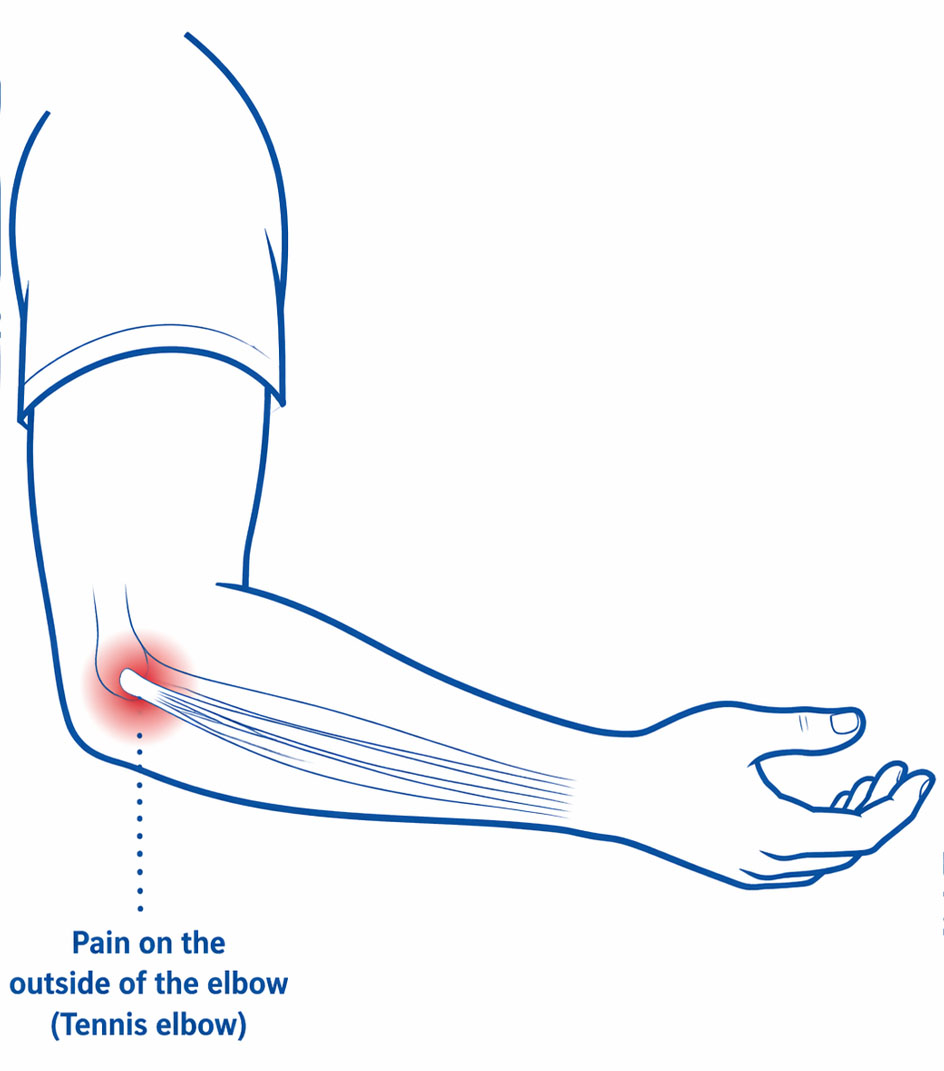
Symptoms of tennis elbow
You may experience one or all of the following:
- Outer elbow pain on gripping or lifting
- Outer elbow pain on opening jars/twisting movements of the wrist
- Localised tenderness on the outside of the elbow
- Stiffness on bending or straightening the elbow joint, particularly first thing in the morning
- Occasionally mild swelling and heat can be present
How common is tennis elbow?
Tennis Elbow is a common condition within the UK.
Annually, it is estimated that 1 in 200 people consult their GP about Tennis Elbow symptoms. It affects both men and women equally.
Tennis elbow mainly affects adults and most commonly affects those within the 40-60 age group.
What causes tennis elbow?
Some of the muscles that help to move your wrist and forearm attach via a tendon to a common point at the outside of your elbow. Straining these muscles can lead to small tears and inflammation within the tendon resulting in Tennis Elbow pain.
Overuse of these muscles can happen with small repetitive movements, such as typing and using a computer mouse or with strenuous activities. It can also be triggered by a sudden increase in manual activity. For example, tasks that you would not do on a regular basis like gardening, spring cleaning or D.I.Y.
Knocking or banging your elbow can cause soft tissue inflammation and can also very occasionally trigger Tennis Elbow.
Despite its name, only around 5% of Tennis Elbow injuries are actually caused by racquet sports!
What can help with tennis elbow?
Making changes to your lifestyle as well as reducing aggravating activities is key to aiding your recovery. Only you can do this.
There are a number of things you can do to help including:
- Avoid painful movements particularly those that involve straining the forearm muscles
- Reduce repetitive twisting movements of the wrist, gripping and lifting.
- Make sure you take regular short breaks from activities that aggravate your elbow pain such as typing, lifting or repetitive work.
- Change activities to reduce pain. For example, lifting/carrying objects with the palms facing up can be more comfortable. Use of ergonomic computer equipment can also be helpful. Your employer may be able to supply this following a work station assessment.
- Limit the stress on the tendon by relaxing your grip as much as possible when lifting or driving.
Pacing and spacing
- Pacing and spacing methods can help you manage your pain better.
- Pacing is the term used for breaking down an activity or task. This can be done by taking regular breaks. Prioritising daily activities can also help. This can prevent “over stimulating” your pain system.
- When completing challenging tasks or activities, it may be useful to set a “baseline”. This is the amount you can manage on a good or bad day without increasing your symptoms. Therefore you can plan rests and set achievable goals.
Pain activity ladder
- By following the pain activity ladder you can identify activities that you would consider severely painful, moderately painful and mildly irritating and act to change your habits.
- The pain scale, most often used in healthcare, measures pain from 0-10 (zero being no pain and 10 representing the worst pain you could imagine).
- If you can identify the level of pain you are experiencing, you will find out if you are in the green, amber or red zone. The best way to move down to the green zone is by pacing and spacing your activity.
- When you are completing your rehabilitation exercises it is often best to work within the green (and sometimes amber zones depending on what you deem is an acceptable level of pain) both during the exercises and within 48 hours of completing your exercises. If you find yourself in the red zone you are likely pushing yourself too hard and may flare up the pain.
If after following the above advice, your symptoms have not improved within 6 to 12 weeks, a referral to a physiotherapist may be beneficial. Speak to your GP about a referral.