


Osteoarthritis is a condition that affects the joints causing pain and stiffness. The knee is one of the most commonly affected joints.
When a joint develops osteoarthritis some of the cartilage covering the joint surfaces can gradually roughen and become thin. The bone underneath the cartilage then reacts by growing thicker and becoming broader, which can result in swelling and restricted joint movement.
These changes in and around the joint are partly the result of the inflammatory process and partly your body’s attempt to repair the area. In many cases, the body can repair the injured area with time. However, in other cases the body repair doesn’t work as well, leading to more pressure on other parts of the joint, which can gradually worsen over time.
What are the symptoms of knee osteoarthritis
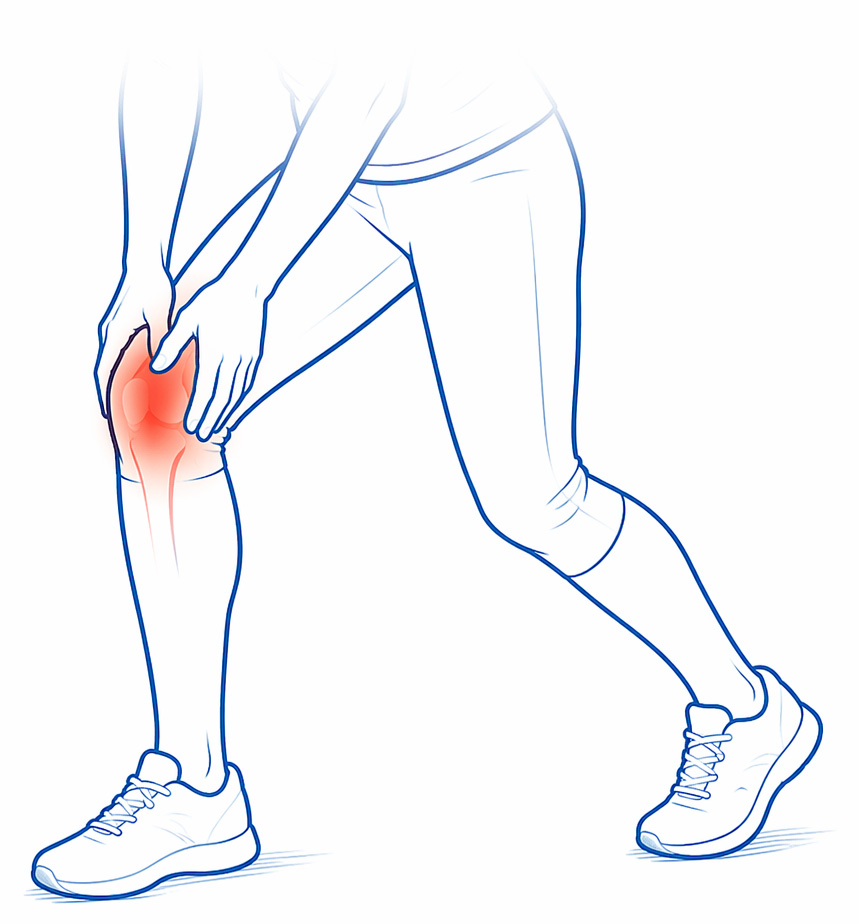
The main symptoms of osteoarthritis are pain and sometimes stiffness, which can affect one or both knees and can make it difficult to move and do certain activities. You may have pain all-around your knee or just in certain places such as the fronts or sides. It may be worse after activities such as getting out of a chair, going up and down the stairs or kneeling. The pain normally reduces when you rest.
You will probably find that your pain changes and that you can have good days and bad days. This may depend on how busy or active you are. Sometimes there can be no obvious reason for changes in your pain.
The knee may feel stiff at certain times, often in the mornings or after a period of rest. Walking for a few minutes can ease the stiffness and walking long distances can increase your symptoms. Many people don’t have any stiffness at all.
Sometimes the joint can give-way suddenly because the muscles have become weak. You may notice the muscles at the front of your thigh look thinner than the other side, this can cause the giving-way sensation.
How common is knee osteoarthritis
Osteoarthritis is by far the most common form of joint disease and the knee is one of the most commonly affected joints. It is more common as people get older; symptoms often start from late 40s. Women are twice more likely to have symptoms of knee osteoarthritis than men.
Research shows that individuals who have a Body Mass Index (BMI) classified as ‘obese’ are up to four times as likely to develop knee osteoarthritis.
What causes knee osteoarthritis
We know from research that it is more common as people get older, more common in women than men and more common in those that are significantly overweight. However, symptoms of osteoarthritis are influenced by many factors unique to each person.
Lifestyle factors such as the amount of exercise you take can influence your symptoms. The knee joint is designed to move and take the load of the body however, inactivity and lack of regular exercise can lead to muscle weakness and joint stiffness and is likely to make the osteoarthritis worse. Loading the knee joint with a higher load than it can cope with or repetitively overloading the joint can make symptoms worse e.g. kneeling or high impact activities that you are not used to.
Other factors such as fear of movement, feeling down (low mood), stressed, feeling tired, being overweight, lacking sleep and lacking self-confidence can cause changes to the nervous system and the body’s chemistry making the joint structures very sensitive.
A previous severe injury to the knee can make it more likely you will develop knee osteoarthritis in the future. However, normal day-to-day loading of the knee does not seem to make knees at risk. Research has shown that runners have lower rates of osteoarthritis than those who are not active.
Pain activity ladder
By following the pain activity ladder you can identify activities that you would consider severely painful, moderately painful and mildly irritating and act to change your habits.
The pain scale, most often used in healthcare, measures pain from 0-10 (zero being no pain and 10 representing the worst pain you could imagine).
If you can identify the level of pain you are experiencing, you will find out if you are in the green, amber or red zone. The best way to move down to the green zone is by pacing and spacing your activity.
When you are completing your rehabilitation exercises it is often best to work within the green (and sometimes amber zones depending on what you deem is an acceptable level of pain) both during the exercises and within 48 hours of completing your exercises. If you find yourself in the red zone you are likely pushing yourself too hard and may flare up the pain.
Pacing and spacing
Pacing and spacing methods can help you manage your pain better.
Pacing is the term used for breaking down an activity or task. This can be done by taking regular breaks. Prioritising daily activities can also help. This can prevent “over stimulating” your pain system.
When completing challenging tasks or activities, it may be useful to set a “baseline”. This is the amount you can manage on a good or bad day without increasing your symptoms. Therefore, you can plan rests and set achievable goals.
Physical activity
General Exercise can also improve your knee symptoms as well as your energy levels, help reduce stress, anxiety and depression, improve sleep, and improve your self-confidence.
NHS Health Scotland recommends to aim for 150 minutes of exercise per week. Do not worry if you are not close to this amount, as over time by gradually building up your activity you can reach this and experience the benefits of physical activity. It is also recommended to sit less and move more throughout the day, and a good way to monitor this is by using a step counter or activity diary. You can gradually increase your steps towards the recommended goal of at least 10,000 steps per day, as your symptoms allow.
It is important that if you are not used to exercise, you start small and gradually build up toward these goals to allow your body time to adapt. Try not to overdo it on “good days” and take more rest on “bad days”.
Activities like brisk walking, dancing, tai-chi, yoga, following home exercise videos, or anything that gets you breathing a little harder or sweating a bit more is a good start. If you want to follow free online exercise programs, including yoga and tai-chi, you can visit the NHS resources for more information.
When to speak to a professional
It is important to seek medical help if your knee pain becomes severe and your knee is warm to touch or you are unable to take weight through your knee in standing, especially if any of these symptoms are accompanied with a fever (high temperature, chills, fatigue). Contact your GP or NHS 111
You may find it helpful to talk to other people or attend a support group with others who have osteoarthritis. The Versus Arthritis helpline is open 10am – 4pm weekdays. Call free on 0808 800 4050.
If after following the above advice, your symptoms have not improved within 6 to 12 weeks, a referral to a physiotherapist may be beneficial. Speak to your GP about a referral.