


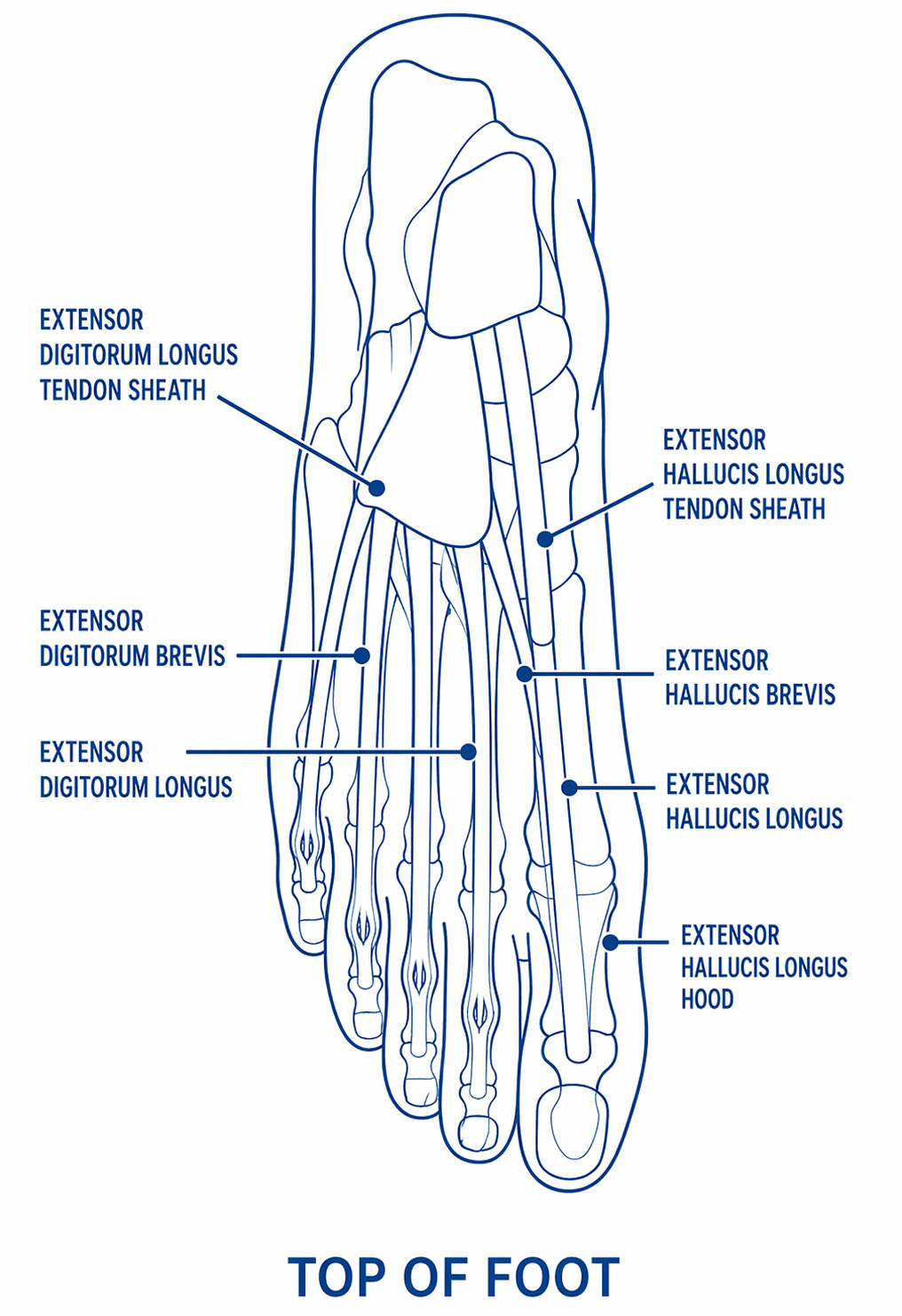
Extensor tendinopathy is a condition involving one or more of the tendons that run along the top of your foot. These tendons attach to muscles that lift your foot up and help the foot clear the ground when you walk. If these become overworked they may become painful and swollen.
Treatment for extensor tendinopathy in the early stages usually begins with exercises that you can do at home.
What are the extensors?
The extensors muscle group are found on the front of the leg and ankle with their tendons running down along the top of the foot, inserting into different areas in the foot. The tibialis anterior is the main muscle which lifts the ankle and it also helps to turn the ankle in. When you walk these muscles are mainly active when the foot is swinging to lift the ankle/toes to stop the foot from catching the ground and to control your foot as it lands.
What are the symptoms of extensor tendinopathy?
- Gradual onset of an aching pain at the top of the foot and or front of ankle
- Swelling at the top of the foot
- Pain that increases with activity
- Pain may be made worse by wearing shoes, especially if they are too tight
What causes extensor tendinopathy?
It is thought to be caused by overuse which can lead to small injuries of the tendons which can cause pain.
The repetitive stress and micro trauma causes the normal ability to heal to slow which results in a painful forefoot/ extensor tendon.
Other contributing factors:
- Older age
- Being overweight
- Diabetes has been linked to increased risk of developing Extensor tendinopathy
- Inflammatory conditions i.e. rheumatoid arthritis, psoriatic arthritis etc
- Weakness and/ or tightness in the muscles within your feet or leg
- Wearing ill-fitting footwear can cause irritation and increased pressure over the top of the foot. Ensure you are not tying your laces too tight
- Spending long periods of time standing, walking or running, especially with a sudden increase in these activities.
- Poor exercising/training technique and lack of recovery between activities
- Prolonged use of oral corticosteroids and a certain family of antibiotics (fluoroquinolones)
- Previous foot and ankle surgery/trauma
- Smoking
What can help with extensor tendinopathy?
Helpful tips
The great news is that most people’s symptoms improve by following the recommended advice below, but it may take several months to get better.
If you have any of the contributing factors that can be changed it is important that you make the necessary changes to these. This will help your recovery.
Footwear
Avoid wearing hard, flat or unsupportive footwear. Very flat shoes may aggravate your symptoms especially if you also have tight calf muscles. It is important to note that shoes that have flexible soles generally offer the foot less support and can increase the stress in the soft tissues of your foot and ankle. If your footwear has shoelaces makes sure they are tied correctly.
Timescales/Prognosis
Most people with Extensor tendinopathy symptoms improve within 3 months of following the recommended advice, however, symptoms can take up to 1 year to improve in some people.
It is also normal to have periods of increased pain or flare-ups during your recovery.
If after following the above advice, your symptoms have not improved within 6 to 12 weeks, a referral to a physiotherapist may be beneficial. Speak to your GP about a referral.